

In the shifting landscape of hospitality technology, RoomRaccoon has rapidly become a central player for independent hotels and small properties seeking agile, all-in-one management tools. Hoteliers are now searching for nimble solutions that streamline payment processes, enhance revenue management, boost direct bookings, and minimize agency commissions. RoomRaccoon’s client base spans from boutique inns to mid-range chains, eager for a cloud-based platform that automates communication, centralizes operations, and increases staff efficiency. Over the years, feedback highlights the transformative impact of seamless property and channel management, as well as user-friendly interfaces and reliable customer support. Yet, challenges such as technical glitches, onboarding hurdles, and evolving expectations remain part of the conversation. Across global markets in 2026, both praise and critique paint a nuanced portrait of RoomRaccoon, revealing a software solution deeply intertwined with the daily realities of hospitality businesses. As this comprehensive review unpacks, understanding the balance of automation advantages, support strengths, and persistent friction is crucial for potential users making technology choices in an era of continuous change.
At a glance:
Comprehensive hotel management—RoomRaccoon combines property, channel, and booking engine functionality in a single interface.
Exceptional support and onboarding—Personalized training and a customer success team help users overcome the initial learning curve.
Automation and dynamic pricing—Integrated revenue management and communication automation tools drive higher profits and operational efficiency.
User feedback highlights—Direct booking rates increase, reliance on agencies drops, and work-life balance improves, though some report technical glitches and slow support responsiveness.
Transparent pricing structure—Subscription tiers are tailored to property size, and a free trial is available. API integration enables connections with third-party tools.
Continuous improvement and adaptability—Ongoing updates, support for multiple languages, and user-driven enhancements reflect RoomRaccoon’s ambition in global hospitality.
Comprehensive Review of RoomRaccoon: All-in-One Hotel Management Software
RoomRaccoon Core Features: Property, Channel, and Booking Engine Management
RoomRaccoon is celebrated for its integrated suite that brings together critical hotel operations under one digital roof. Central to its allure are modules for property management, channel management, and a robust booking engine. These allow property staff to supervise reservations, coordinate inventory across leading online travel agencies, and process direct bookings with minimal manual intervention. By aggregating these functionalities, RoomRaccoon reduces the fragmentation often experienced by independent hotels juggling multiple systems.
In practical terms, one fictional hotelier—Maria from the urban “Emerald Lane Hotel”—noted how the system’s channel manager automatically tuned room availability on Booking.com, Airbnb, and direct websites in real time. This prevented double bookings, streamlined communication across platforms, and allowed her small staff to focus on guest experience rather than calendar management. Additionally, upsell tools embedded in the booking engine gave properties new means to capture ancillary revenue at the moment of reservation.
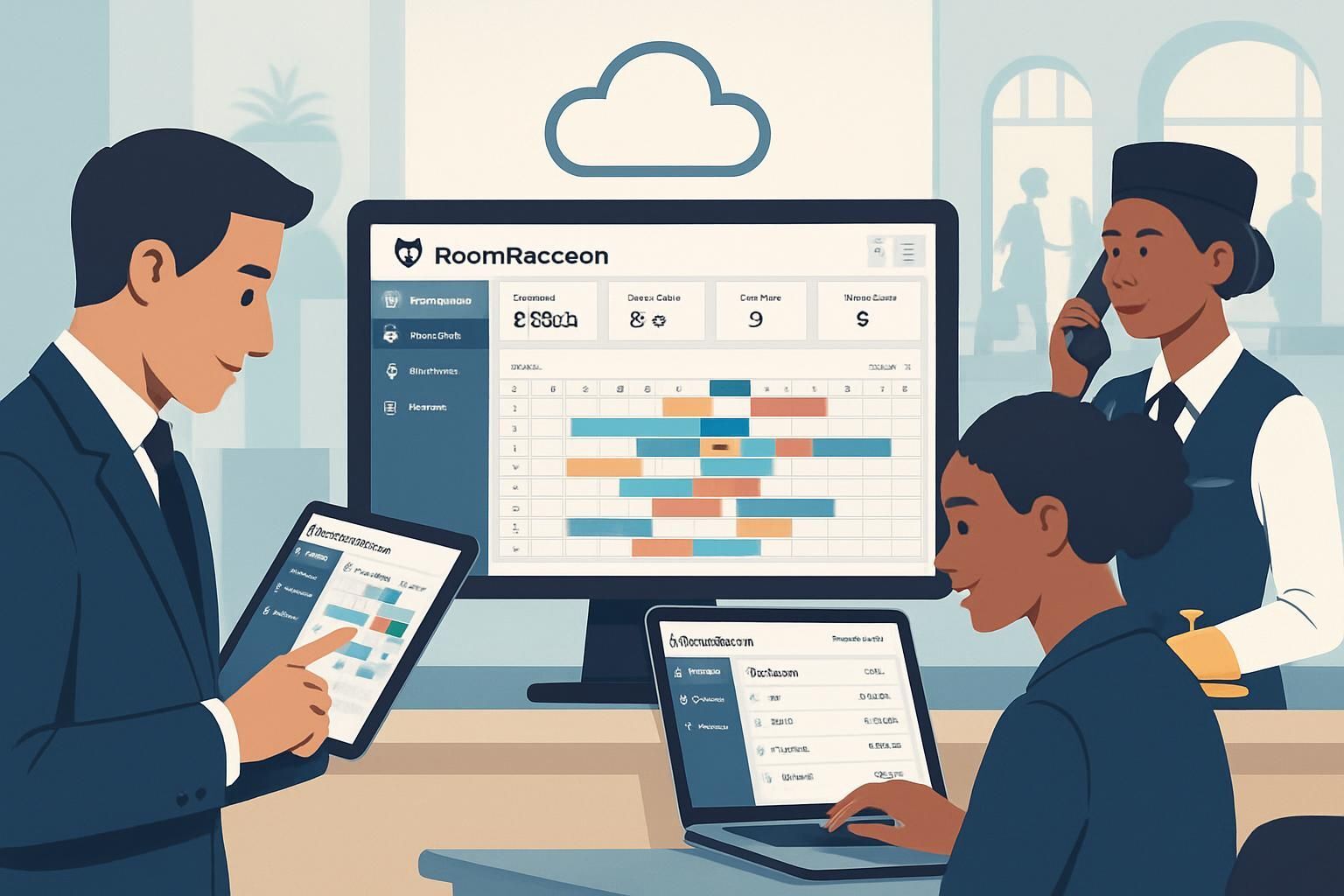
An area frequently cited in reviews is the all-in-one capability, which significantly lightens the operational load. Revenue managers and owner-operators alike praise the ability to access centralized data from anywhere, collaborate on live updates, and rely on automatic rate and availability adjustments. This intersection of property, channel, and booking management is particularly valued by hoteliers navigating a competitive online marketplace.
Cloud-Based Platform and User-Friendly Interface of RoomRaccoon
A defining characteristic of RoomRaccoon is its fully cloud-based architecture. Unlike legacy property management systems requiring on-premises installations and costly IT upkeep, RoomRaccoon offers complete mobility and platform independence. Users log in securely from any location and device—laptops, tablets, smartphones—without specialized hardware. This flexibility empowers remote management and gives hospitality leaders real-time oversight when traveling or away from their properties.
From the first login, the interface earns praise for its intuitive, uncluttered layout. For example, Tomas, who manages a nine-room guesthouse, described how RoomRaccoon’s dashboard enabled his novice staff to quickly grasp workflows, check arrivals, and handle housekeeping schedules. Visual cues and context-sensitive help further reduced the onboarding burden.
The commitment to user-friendliness is noted as a key support element, as ongoing updates apply industry best practices and user feedback to streamline navigation. However, some reviews flag occasional confusion with newer features, requiring intermittent guidance from customer support or additional training—a reminder that even user-centric interfaces can present a brief learning curve.
Dynamic Pricing and Revenue Management Tools in RoomRaccoon
Hoteliers in 2026 demand robust control over pricing and yield. RoomRaccoon’s revenue management suite—headlined by dynamic pricing—automates rate changes in response to occupancy trends, competitor rates, and seasonal demand peaks. This ensures properties remain agile in a volatile market, capturing optimal revenue on busy nights while minimizing empty rooms on slower dates.
A recent case came from Leora, revenue manager at the “Sapphire Springs Boutique,” who increased monthly income by 18% following hands-on training in RoomRaccoon’s dynamic pricing algorithms. The ability to simulate rate scenarios and receive revenue optimization tips within the platform enhanced not only revenue but also staff confidence.
Integrated upselling tools further contribute to incremental profit, allowing properties to offer late checkouts, breakfast add-ons, or room upgrades at opportune moments. These features automate cross-selling, meaning staff are freed from manual upsell efforts, and guests receive customized offers aligned with their preferences.
Housekeeping and Communication Automation: Enhancing Hotel Operations
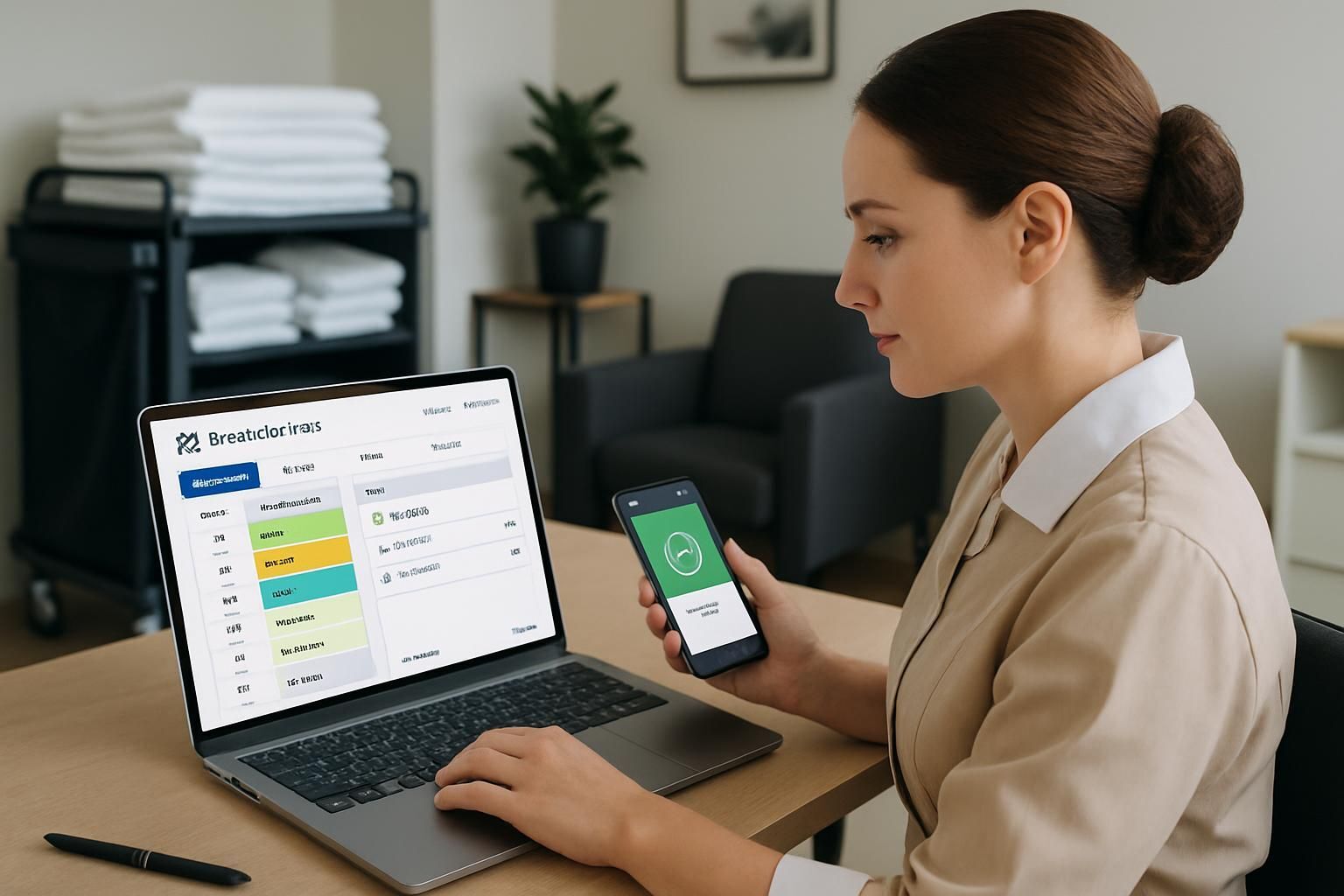
One standout area in user reviews is RoomRaccoon’s seamless automation for housekeeping scheduling and staff communication. Once a guest checks out or a room is booked for arrival, the corresponding housekeeping status updates automatically, ensuring cleaning teams are informed in real-time without the need for radio calls or spreadsheets. This not only elevates operational efficiency but also reduces room turnover times—an important factor in guest satisfaction.
Internal chats and automated notifications help maintain synchronization between reception, maintenance, and housekeeping. For instance, a property manager named Raj recounted how RoomRaccoon’s automation allowed for quick response to late checkouts or maintenance tasks flagged during cleaning. These streamlined flows are often praised as a competitive edge in user reviews.
In tandem, AI-based virtual assistants embedded in RoomRaccoon provide staff with scheduling and communication prompts, reinforcing the system’s core strength: reducing manual workload while raising the bar for service consistency and quality.
Online Check-In and Payment Processing Capabilities with RoomRaccoon
Modern guests expect frictionless arrivals and departures. RoomRaccoon addresses this need with a digital check-in module that permits guests to pre-register from smart devices or kiosks, upload identification, and receive keyless entry codes. This feature not only helps hotels deliver a contactless experience—especially valued since the global events of the last decade—but also liberates front desk resources during peak times.
Integrated payment processing is another pillar, supporting a wide range of gateways and currencies. Hotels can accept deposits, secure reservations, process refunds, and automate invoicing from within the system. These functions minimize reconciliation errors and accelerate cash flow. When technical issues do occur—such as temporary payment gateway outages or delays in processing refunds—they are typically resolved with the intervention of RoomRaccoon’s support team, though some users express frustration if these problems linger at busy times.
Despite rare glitches, the overall streamlined approach to guest onboarding and payment management continues to attract positive feedback in many reviews.
Navigating the Onboarding Process: Learning Curve and Training Insights
A frequently mentioned topic in RoomRaccoon reviews is the initial onboarding phase. New users—especially those transitioning from paper-based systems or fragmented software—may find the early days challenging, as they migrate property data, connect distribution channels, and educate staff on new workflows.
RoomRaccoon meets this hurdle head-on by providing a structured training process, often paired with step-by-step setup guides and personal support. Still, the steepness of the learning curve varies depending on prior tech familiarity and property complexity. For example, Anne-Marie, the owner of a 22-room countryside retreat, recounted her staff’s initial overwhelm but highlighted how the tailored onboarding support and gradual learning pace ultimately boosted their confidence.
Structured training sessions focus on live demonstrations, allowing users to mimic real-life scenarios. These measures accelerate knowledge transfer and ensure accuracy as users get up to speed.
Role of Customer Support in Overcoming Initial Challenges
Effective onboarding hinges on timely, expert support. RoomRaccoon has invested heavily in a dedicated support team, guiding users through common roadblocks such as rate setup, account linking, or payment method configuration. Many reviews applaud the responsiveness and patience of support staff during this crucial period—helping turn a potential stumbling block into a catalyst for long-term success.
The willingness of RoomRaccoon’s agents to provide detailed explanations or hands-on troubleshooting is frequently credited with reducing user anxiety and promoting smooth adoption. However, occasional feedback does mention uneven experiences depending on regional availability or support load, particularly during high-demand periods.
Personalized Training Sessions and Knowledge Transfer Best Practices
RoomRaccoon’s approach to training is multilayered, offering personalized sessions for property managers and staff. These range from onboarding tutorials and live webinars to recorded video walkthroughs that address both strategy and hands-on implementation.
Best practices encourage small properties to schedule additional refresher sessions during system updates or expansion, ensuring staff remain comfortable with new tools. For many operators, these investments in ongoing training and knowledge sharing translate directly into improved efficiency and reduced future reliance on support.
Customer Success Team Expertise: Real Examples of Support Excellence
RoomRaccoon’s customer success team is widely recognized for its approachability and technical expertise. For example, Jessica, manager of a lakeside inn in Switzerland, detailed how her assigned customer success manager conducted a series of deep-dive sessions about the revenue module, enabling her to optimize pricing and reduce overbooking.
In several instances, reviews mention support specialists stepping in to troubleshoot payment integration problems or resolve channel connection issues mere hours before peak season. The team’s understanding of specific hospitality challenges—such as local regulations, payment preferences, or multi-property requirements—builds user confidence and fosters loyalty.
RoomRaccoon’s ongoing support is further enhanced by resourceful self-help documentation for troubleshooting and escalation. While some incidents expose pockets of less experienced support staff, the consensus is that the blend of expertise and empathetic problem-solving defines the RoomRaccoon support experience.
Roomraccoon Plan Comparison Table
Interactive comparison table of RoomRaccoon software plans including main features, support and rating.| Feature | Core Plan | Pro Plan | Enterprise Plan |
|---|---|---|---|
| Average User Rating | |||
| Number of Reviews |
User Feedback on RoomRaccoon: Automation Benefits and Revenue Growth
User-generated reviews consistently cite automation as a driving force behind improved business outcomes. Task automation—from pricing adjustments to daily housekeeping communications—frees staff for higher-value guest interactions and strategic planning. Thanks to AI-driven modules and structured workflows, operational mistakes drop and guest satisfaction metrics rise.
Revenue growth is another common theme. Properties report higher occupancy, stronger direct booking ratios, and increased average daily rates after deploying the RoomRaccoon revenue toolkit and booking engine. Embracing automation not only sharpens operational control but also reduces the dependency on expensive third-party channels.
Impact on Direct Bookings and Agency Dependency Reduction
RoomRaccoon’s direct booking engine attracts many users aiming to reclaim profit margins lost to agency fees. For example, the fictional “Seaside Breeze Hostel” documented a 12% jump in direct bookings within six months, following a targeted campaign powered by RoomRaccoon and custom promotional rates. Many hoteliers echo these results, noting that the autonomy in managing pricing and inventory yields immediate financial relief.
Below is a comparison table reflecting typical outcomes for hotels before and after RoomRaccoon adoption:
Metric | Before RoomRaccoon | After RoomRaccoon |
|---|---|---|
Direct Booking Ratio | 27% | 42% |
Revenue per Available Room | €65 | €78 |
Staff Hours Spent on Manual Entries | 16 hrs/week | 6 hrs/week |
Agency Dependency | High | Moderate-Low |
Improvements in Work-Life Balance and Operational Efficiency
Among smaller hotels and owner-run inns, numerous reviews share stories of improved work-life balance. RoomRaccoon’s automation tools and centralized communication mean managers can delegate tasks, monitor operations on mobile devices, and step back from round-the-clock oversight. Customers value the mental clarity and flexibility this brings, with several recounting family events uninterrupted by frantic guest calls or booking emergencies.
Common Criticisms of RoomRaccoon: Technical Glitches and Communication Delays
While RoomRaccoon receives significant acclaim, its reviews also point to recurring pain points—chief among them, technical glitches and lapses in support. Some users detail how sudden system slowdowns, overbookings, or delayed rate updates have disrupted operations during critical periods, like high season or festivals. Issues accessing the finance module or inconsistent payment partner integrations also surface periodically.
Technical faults are especially frustrating when they coincide with major guest arrivals or revenue spikes, sometimes resulting in loss of trust or additional manual work.
User experience is notably tarnished when support responses are slow or lack detailed follow-up.
Such challenges underscore the importance of reliable customer support and transparent communication when patches are needed. In rare cases, reviews highlight a perceived lack of ownership among entry-level support staff, prompting calls for better escalation protocols and more robust error prevention.
System Limitations: Group Reservations and Payment Integration Issues
RoomRaccoon, though broad in scope, has limitations. Some properties that handle frequent group bookings lament the absence of advanced group reservation tools—requiring manual workarounds that clash with the otherwise automated environment. Payment integration can be patchy, particularly across international gateways or less-common PSPs.
These boundaries pose hurdles for hotels aiming for frictionless, end-to-end operations, suggesting ongoing refinement is critical as RoomRaccoon evolves.
User Frustrations with Support Responsiveness and Reliability
Several reviews describe mixed experiences with RoomRaccoon’s support—some praise rapid resolutions and proactive outreach, while others lament delayed replies or incomplete fixes. Typical frustration arises when troubleshooting lingers, or when responsibility appears dispersed between different support agents.
As hospitality businesses operate outside standard office hours, the restriction of support mainly to business hours is seen as a weakness, especially for properties in time zones with less direct coverage.
Addressing Challenges: RoomRaccoon’s Continuous Improvement Efforts
Since its launch, RoomRaccoon has demonstrated a willingness to act on user reviews and feedback by rolling out system updates and targeted fixes. Post-incident improvement initiatives—such as rapid bug deployment, expanded help documentation, and new training resources—reflect a focus on continuous enhancement.
Anecdotal examples from property managers describe direct communication from RoomRaccoon’s product team soliciting suggestions or clarifying unresolved issues, particularly in the case of recurring glitches or incomplete integrations. While perfection remains a moving target in hospitality technology, the company’s transparency and iterative progress signal a long-term commitment to user satisfaction.
Global Reach and Adaptability: Language Support and Scalability for Independent Properties
RoomRaccoon’s adaptability stems from automatic language selection, ensuring the interface and notifications align with local staff and guest preferences around the globe. This global reach makes the platform especially attractive to independent properties eager to capture international clientele without the cost of custom translation or third-party plugins.
The system’s modular build also enables scalability as hotels expand: properties can add rooms, experiment with new markets, or roll out cross-border promotional campaigns relying on the same familiar dashboard and responsive support structures.
Pricing Structure, Subscription Plans, and API Integration Features
A clear and tiered pricing structure underpins RoomRaccoon’s commercial offer. Subscription plans scale based on property size, room count, and feature set—starting from affordable entry-level budgets and rising for larger or multi-site operators. A free trial allows potential clients to evaluate fit before committing, a policy well-liked in reviews.
Central to attracting technologically advanced users is the platform’s API, which facilitates third-party integration—spanning payment gateways, marketing tools, business intelligence, and custom analytics. Properties seeking greater automation or bespoke workflows often cite this flexibility as a competitive advantage, while ongoing API expansion signals RoomRaccoon’s future-readiness.
The company’s transparent approach to pricing and integration options helps set clear expectations and curtails unwelcome surprises down the road.
Training Resources and Customer Support Availability for RoomRaccoon Users
RoomRaccoon’s service ecosystem is built on accessible support and diversified training materials. The company anchors its reputation in the hospitality tech market by recognizing that even sophisticated automation cannot fully replace the reassurance of a knowledgeable human team.
Support is available primarily during business hours, with an online helpdesk, ticketing system, and email for non-urgent cases. Users needing after-hours or emergency intervention will find current coverage somewhat limited, which is reflected in recent reviews.
Diverse Educational Formats: Webinars, Video Tutorials, and Documentation
To bolster user autonomy, RoomRaccoon offers training in multiple formats: live webinars, extensive video tutorials, and carefully curated documentation. These tools empower users to self-educate, reduce reliance on support for common queries, and onboard new employees with minimal interruption.
Best-practice recommendations encourage properties to supplement initial training sessions with ongoing education, ensuring every team member remains current on new features and industry regulations.
Support Accessibility: Business Hours and Online Channels
While the company’s support is lauded for professionalism and problem-solving, its business-hour limitation remains a sticking point for operators in different time zones or those with 24/7 operations. However, efficient use of online chat and email, coupled with frequent updates to self-help resources, partly compensates for this constraint.
Integration between the help desk and platform dashboard means users can submit tickets or access FAQs without leaving their workflow—streamlining the support process and encouraging timely resolution.
Authenticity in Review Platforms: Understanding User-Generated RoomRaccoon Feedback
The credibility of RoomRaccoon reviews depends on the integrity of review platforms. Leading portals require verification steps, including email confirmation or account syncing, to ensure that feedback comes from genuine RoomRaccoon users. The suppression of incentivized reviews or blatant marketing content is increasingly standard for reliable reputation management.
Prospective RoomRaccoon clients are encouraged to cross-reference multiple platforms, focusing on reviews that detail concrete experiences with features such as support, automation, payment processing, and integration impacts.
Verification Processes and Importance of Genuine Customer Opinions
Systematic verification of reviewer identities and property status protects the ecosystem from spam or competitor sabotage. Both RoomRaccoon and third-party aggregators regularly audit their reviews for authenticity, boosting the reliability of aggregate ratings and customer insights.
Impact of Bias and Incentives on Review Trustworthiness
Bias—intentional or not—is always a risk. Users motivated by negative experiences or incentives may overstate or understate RoomRaccoon’s true value. This highlights the importance of seeking specific, unvarnished feedback on key features: support, integration flexibility, revenue impact, and operational reliability.
Insights from Diverse Users: Small Hotels, Revenue Managers, and Operational Staff
The most helpful RoomRaccoon reviews come from a spectrum of voices—owner-operators, specialized revenue managers, and front-line staff—each bringing unique priorities. Listening for these differentiated perspectives enables prospective users to anticipate real-world challenges and confidently select the right solution for their context.
User Profile | Key Needs | RoomRaccoon Strengths Identified | Reported Weaknesses |
|---|---|---|---|
Small Hotel Owner | End-to-end automation, operational oversight | Ease of use, responsive support | Learning curve, group reservation limits |
Revenue Manager | Dynamic pricing, rate parity | Revenue tools, API integration | Technical glitches, finance access delays |
Operational Staff | Task scheduling, communication | Real-time automation | Support hours, bug resolution |
What core benefits does RoomRaccoon deliver for small hotels?
RoomRaccoon centralizes operations, automates bookings and housekeeping, and integrates channel and payment management, which translates to improved efficiency, higher revenue, and fewer manual errors for small independent properties.
How does RoomRaccoon support onboarding and staff training?
The company offers personalized onboarding with live remote guidance, access to video tutorials and documentation, and structured training sessions that are tailored by property type and staff role.
What are common criticisms found in RoomRaccoon reviews?
Technical glitches during peak periods, limitations with group or payment integrations, and slow support responsiveness—especially outside business hours—are recurring challenges reported by some users.
Is RoomRaccoon suitable for properties expanding internationally?
Yes—RoomRaccoon features automatic language support and a scalable interface, making it adaptable to diverse markets and property types, with a robust system for multi-lingual staff and guests.
How is pricing structured for RoomRaccoon, and are integrations supported?
Plans scale with property size and needs, starting from a flexible subscription model. An API is available for integrating with third-party payment, marketing, and analytics tools, and a free trial is offered for evaluation.