
Lodgify vs iGMS has become a defining question for thousands of professional vacation rental hosts. As the short-term rental market explodes with new entrants—from boutique owners in Paris to apartment managers in Los Angeles—choosing the right software stack is no longer just a matter of convenience. The stakes are high: direct booking capabilities, real-time integration across channels like Airbnb, Booking.com, and Vrbo, automation tools that enable lean teams to scale, and customized revenue reports. These behind-the-scenes decisions directly shape guest satisfaction, profit margins, and the very identity of a lodging business.
In this evolving landscape, both Lodgify and iGMS stand as leaders—but their strengths diverge sharply. Lodgify appeals to owners eager for brand-building and seamless, independent booking experiences. Meanwhile, iGMS targets managers hungry for enterprise-level automation and real-time OTA control. Each solution addresses distinct needs around channel manager reliability, website builder potential, payment processing, and customer support responsiveness.
On the following journey, we’ll enter the daily realities of hosts like Lina—a seasoned Barcelona manager juggling 25 apartments—and Ben, a first-time owner in Miami, to reveal how these platforms shape growth, efficiency, and guest satisfaction. The result? A vivid, practical breakdown that goes beyond feature lists, offering actionable insights through real-world narrative, scenario-based comparisons, and critical professional benchmarks.
At a Glance
Core Value Focus: Lodgify excels in direct booking and personalized website builder functionality, while iGMS delivers advanced channel manager automation and real-time OTA integration.
Channel Management: iGMS offers live sync with Airbnb, Vrbo, and Booking.com, ideal for hosts requiring instant updates; Lodgify relies on iCal, with some delay.
Team Management and Automation: iGMS empowers large operations with advanced staff tools and AI messaging, whereas Lodgify prioritizes process streamlining.
Direct Booking Sites: Lodgify provides SEO-optimized, fully branded sites; iGMS recently entered this space with more basic, integrated booking pages.
Pricing and Flexibility: Lodgify uses fixed tiers and booking fees, while iGMS enables pay-per-booking or subscription. Each serves different host profiles.
Customer Support: Lodgify features 24/7 assistance; iGMS offers rapid email support, especially for Pro+ clients.
Switching Guidance: Real-world steps ease migration from Lodgify to iGMS, mitigating disruption.
Alternatives: Other platforms exist—evaluate fit based on operation scale, integration, and support needs.
Lodgify vs iGMS: feature & pricing comparison
| Feature | Lodgify | iGMS | Nota Bene |
|---|
How do we keep features up to date?
Our feature data is researched manually from official documentation and verified user reviews. For real-time status (for example, API status), click here for a live check.
Lodgify vs iGMS: Core Value Propositions for Vacation Rental Hosts
Lodgify’s Strengths in Direct Booking and Automation Tools
Lodgify positions itself as an all-in-one platform focused on empowering hosts and property managers to attract more direct bookings. The cornerstone of its appeal is the fully customizable website builder, which allows hosts like Ben to craft visually engaging, branded sites that reflect the unique identity of each property. Lodgify’s integrated booking engine supports secure reservation flows, complete with built-in payment processing through providers such as Stripe.
Automation tools play a significant role. Hosts can activate dynamic pricing rules, set up automatic guest messaging (from pre-arrival to post-departure), and even schedule cleaning reminders. This means for owners managing a handful of properties, like Lina in Barcelona, Lodgify simplifies administrative overhead—putting process efficiency on autopilot while nurturing the brand’s growth outside major OTAs.
iGMS’s Focus on Multi-Channel Automation and Scalability
Conversely, iGMS was architected for property managers who prioritize scalability and robust multi-channel oversight. Its DNA is rooted in enterprise-level automation: real-time integration with Airbnb, Vrbo, and Booking.com operates like a true channel manager. The unified inbox across these platforms offers a panoramic view for rapid guest communication, while AI-driven messaging sequences reduce workload during busy seasons.
For Lina, overseeing dozens of apartments, iGMS’s smart scheduling—automating everything from cleaning tasks to review requests—means her team can focus on guest experience, trusting the system to handle operational minutiae. Scalability is where iGMS shines, supporting growing managers as they onboard new properties—without the bottleneck of manual interventions.
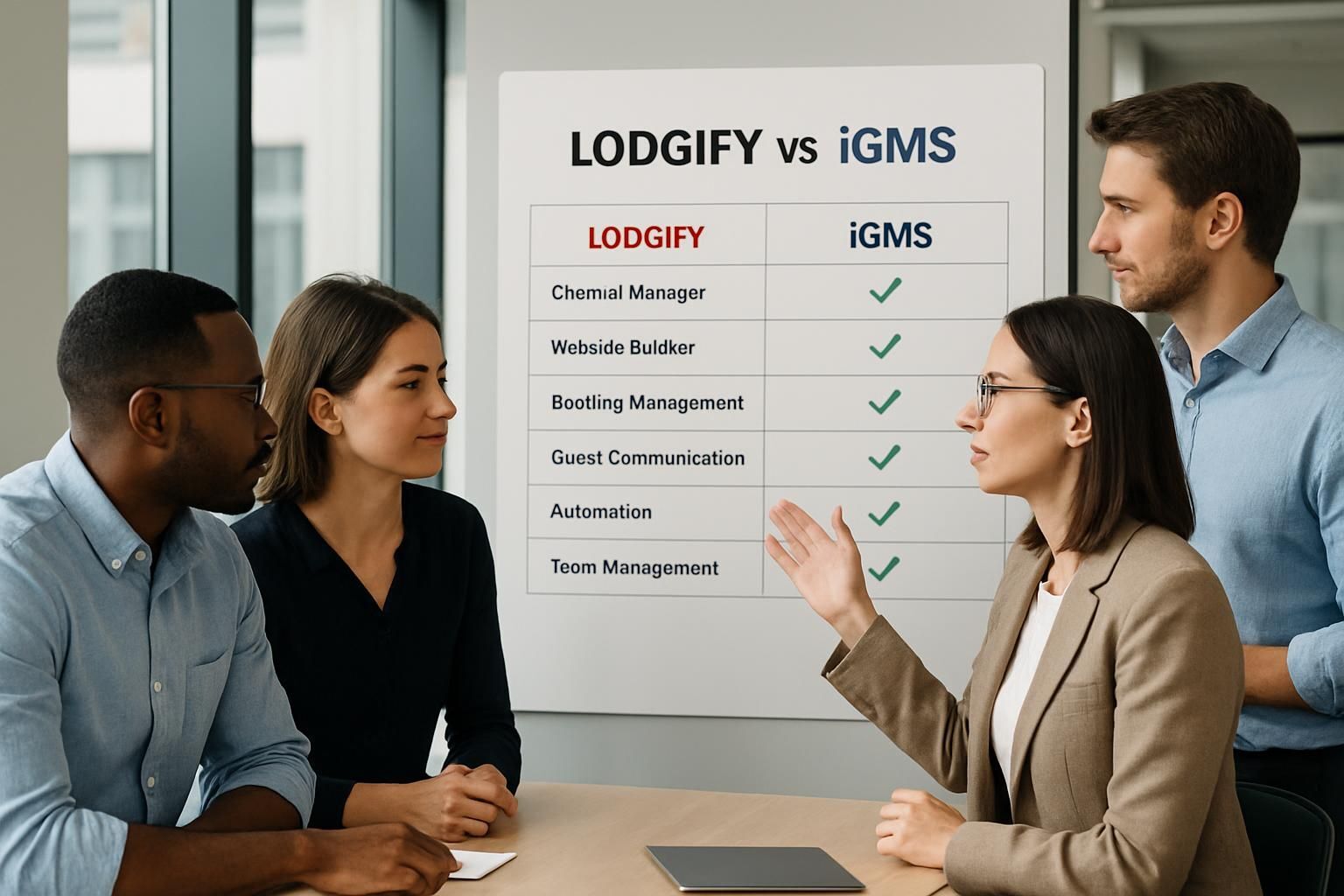
Comparing Channel Management: Real-Time Sync in Lodgify vs iGMS
iGMS’s Real-Time Integration with Airbnb, VRBO, and Booking.com
A major differentiator for iGMS is its genuine real-time, two-way integration as a channel manager. When Lina receives a booking via Airbnb, the calendar instantly updates across Booking.com and Vrbo—eliminating double bookings or manual reconciliation. This real-time feed also reflects changes in listing content and rates, which empowers managers to launch last-minute deals or respond to seasonal demand spikes.
The platform also enriches calendar management with color-coded, filterable schedules. For property managers handling multi-city portfolios, this level of live connectivity injects operational confidence, especially during high-stakes periods like summer in the Mediterranean.
Lodgify’s iCal Syncing: Limitations and Update Delays
Lodgify supports multi-platform listing synchronization primarily through iCal feeds with platforms like Vrbo and Booking.com. However, this method is inherently slower, with updates often taking up to several hours to propagate. In practical terms, Ben recounts a double booking that occurred when a reservation on Airbnb took nearly two hours to reflect on his Lodgify-powered calendar.
While adequate for hosts with lower booking volume or those prioritizing direct reservations, the absence of true real-time integration means Lodgify users must remain vigilant—especially during peak travel windows.
API Integrations and Third-Party Tool Compatibility
Modern vacation rental operations demand seamless integration with accounting systems, cleaning services, smart locks, and analytics tools. iGMS scores high in this area, offering a robust API ecosystem. For instance, Lina connects iGMS with a third-party pricing engine and housekeeping apps, streamlining routine updates without extra logins.
Lodgify also builds bridges to external tools but offers fewer direct integrations, relying on Zapier-like connectors for extended workflows. The distinction is subtle when managing a handful of units, but for large, multi-property teams, the integration gap can add friction and slow growth.
Feature | Lodgify | iGMS |
|---|---|---|
Real-Time OTA Sync | iCal based (Delays) | API, True Real-Time |
Channel Manager Coverage | Airbnb, Booking.com, Vrbo | Airbnb, Booking.com, Vrbo |
Third-Party Integrations | Moderate, via Zapier | Extensive API/Native |
Pricing Tools | Dynamic Pricing, External Tools | Smart Pricing Integrations |
Automation Features Showdown: Lodgify vs iGMS for Hosts
iGMS’s Smart Triggers for Messaging, Scheduling, and Pricing
redefines automation tools by offering customizable smart triggers that manage almost every critical moment in the guest journey. Hosts can set automated messages for check-in/out, locally tailored instructions, and review requests—in English, Spanish, or French. This multilingual capability is a boon for markets like Barcelona or Miami, where cross-border guests dominate.
Smart triggers extend into scheduling for cleaning, maintenance, and even periodic price recalibrations (for instance, after a guest cancels, iGMS can instantly reduce the nightly rate to compete for a quick replacement). This comprehensive automation suite ensures operational consistency, especially vital as property managers scale from a few listings to dozens.
Lodgify’s Messaging Automation and Process Streamlining
While not as granular as iGMS, Lodgify scores with its focus on process streamlining. Hosts benefit from automated messaging templates distributed at key guest milestones: confirmation, pre-arrival, and post-stay. Additional automations include instant quote replies and simplified check-out communications.
Lodgify’s automation tools also support basic dynamic pricing, but lack the advanced triggers found in iGMS. For independent hosts or those less reliant on high-frequency automation, this simplicity translates to less setup time—even if it means losing out on some margin-boosting optimizations.
Financial Reporting and Revenue Management: What Hosts Should Know
iGMS’s Professional Reports and Owner Statements
Moving beyond calendar sync and messaging, iGMS distinguishes itself with professional-grade financial reports. Ben, after switching to iGMS, was immediately impressed by the clarity of cash flow summaries, owner statements tailored for individual investors, and detailed breakdowns of cleaning fees and taxes. Such documentation isn’t just a matter of transparency—it streamlines year-end tax preparation and bolsters investor relationships.
This comprehensive reporting, spanning all channels, is mission-critical for managers juggling multiple contracts and payout scenarios, ensuring every stakeholder stays informed.
Lodgify’s Payment Processing and Basic Payout Overviews
Lodgify centers its revenue management around its integrated payment processing system, collaborating with Stripe for seamless direct booking transactions. Owners can monitor payments received and basic payout overviews, but lack the granular expense tracking and owner statement generation found in iGMS.
Nevertheless, Lodgify’s payout screens provide a straightforward snapshot, suiting hosts whose accounting needs are met with simplicity and a focus on direct bookings revenue visibility.
Direct Booking Website Features: Customization and SEO Benefits
Lodgify’s Website Builder, SEO Templates, and Multilingual Support
A cornerstone of Lodgify’s offering is its modern website builder, equipped with SEO-optimized templates, drag-and-drop design, and translation features covering over ten languages. For property managers wanting to escape OTA dependency, this allows them to cultivate unique, memorable brands online. Guests booking through these personalized sites benefit from transparent pricing and direct host communication.
Mobile Optimization and Free Personalized Domains
In a mobile-first travel world, Lodgify’s booking sites deliver flawless performance on smartphones and tablets. New hosts receive a free personalized domain, ensuring consistent branding from Instagram ads to Google search. This advantage gives smaller operators the digital polish and reach once reserved for larger hotels.
SEO Advantages for Branded Vacation Rental Sites
The integrated SEO toolkit—custom meta tags, blog support, integrated analytics—means even novice users can improve Google visibility. Case studies reveal hosts who transitioned from generic Airbnb listings to Lodgify-powered sites often report a 15-20% boost in direct bookings, sidestepping OTA commission losses.
iGMS’s Branded Website and Integrated Payment Processing
More recently, iGMS rolled out its branded booking page and basic website builder. It incorporates integrated payment processing for instant online transactions, simplifying direct reservations. For busy property managers, this one-page design is rapid to set up, though less customizable than Lodgify’s offering.
While iGMS’s integrated booking process is efficient, hosts desiring full brand control or advanced SEO flexibility may find it limiting. For managers who prioritize speed and simplicity, however, iGMS’s new website feature closes a traditional gap with Lodgify.
Team & Task Management and Customer Support Comparison
iGMS’s Advanced Staff Management Tools for Scaling Operations
A key part of iGMS’s DNA is supporting growth through robust team management. The platform enables hosts to assign specific properties to cleaning staff, maintenance technicians, and guest liaisons using detailed checklists, scheduled notifications, and permission levels. Lina, overseeing properties from Sitges to Madrid, configures iGMS to trigger cleaning orders at check-out—reducing miscommunication and labor costs.
Role-based access provides operational transparency: managers can monitor task completion in real time. For property managers with expansion plans, this level of oversight is transformative.
Lodgify’s Multi-User Capabilities and 24/7 Support Services
Lodgify does provide limited multi-user functionality, enabling co-hosts or team members to contribute—but lacks iGMS’s advanced assignment options. However, its edge lies in customer support: comprehensive 24/7 chat and email help, plus a detailed knowledge base with setup guides, onboarding tutorials, and best practices.
Ben discovered the 24/7 support invaluable during a midnight guest emergency. For hosts operating in multiple time zones, assurance that help is always available can outweigh even sophisticated task management features.
Support Experience Impact: Fast Responses vs Around-the-Clock Access
While iGMS’s primarily email-based support is known for fast turnaround (especially for Pro+ subscribers), the absence of round-the-clock live chat may concern managers with global portfolios. For Lina’s team, quick response is often sufficient—but those hosting in fast-paced markets or unfamiliar with tech setup may prefer Lodgify’s always-on safety net.
Ultimately, the support experience shapes buyer confidence.
A snapshot list summarizing support differences:
Lodgify: 24/7 chat and email, extensive documentation
iGMS: Email support, rapid replies for Pro+ plans, limited live options
Pricing Plans, User Feedback, and Transition Guidance between Lodgify and iGMS
Subscription Models and Booking Fees: Lodgify vs iGMS Pricing
When it comes to pricing, Lodgify adopts a tiered subscription format—Starter, Professional, Ultimate—each with a combination of per-booking fees and flat monthly rates. This is ideal for owners with steady occupancy and predictable cash flow. Booking.com and Airbnb integrations are included, but support for expansion means higher plan tiers add cost.
iGMS provides greater flexibility: hosts can select a fixed monthly subscription or pay-per-booking model. For someone like Lina, managing fluctuating portfolios, the ability to scale payment according to activity makes budgeting more agile. Both models include access to the channel manager, automation features, and integration options—but higher subscription levels in iGMS unlock priority support and additional team seats.
User Testimonials Highlighting Automation and Direct Booking Strengths
User reviews underscore the paradigm: iGMS is lauded by professional property managers for “automation that feels like a full-time assistant.” One iGMS reviewer notes, “Our Airbnb, Booking.com, and Vrbo calendars never miss a beat—we’re always ahead of double bookings.” Lodgify’s users consistently rave about website builder ease and direct booking growth: “Adding my own branding made all the difference in revenue.”
Expert opinions further stress that integration depth and support responsiveness should guide platform choice, especially in rapidly evolving vacation rental markets.
Practical Steps to Switch from Lodgify to iGMS with Minimal Disruption
For hosts planning to move from Lodgify to iGMS, a stepwise process minimizes lost bookings and operational hiccups:
Disconnect existing iCal or API connections from Lodgify to Airbnb, Vrbo, and Booking.com.
Export current and upcoming reservations from Lodgify (CSV export or manual entry).
Import or synchronize all listings in iGMS, ensuring mapping accuracy across OTAs.
Set up smart triggers for messaging, cleaning, and pricing in iGMS before going live.
Notify guests of system changes if necessary, and test new automations daily for the first week.
The careful transition ensures business continuity and enhances workflow benefits from the outset.
Alternative Vacation Rental Management Platforms to Consider
Hosts not fully satisfied with either platform may explore alternatives like Guesty (for enterprise integrations), Hostaway (for extended channel managers), or Tokeet (for affordability). The choice comes down to operational scale, preferred automation tools, pricing expectations, and the depth of customer support offered.
As of 2026, the most effective managers remain those who adapt technology to their team’s unique DNA, matching platform strengths to real-world business demands.
Does iGMS offer true real-time Airbnb and Booking.com integration?
Yes, iGMS employs direct API connections for instant updating of rates, availability, and messages across Airbnb, Booking.com, and Vrbo. This ensures robust channel manager control and eliminates double bookings.
Is Lodgify’s website builder mobile-friendly and optimized for SEO?
Absolutely. Lodgify’s website builder features mobile-responsive design, built-in SEO templates, custom domains, and multilingual support, helping boost direct booking traffic and brand visibility.
Which platform is better for large property management teams?
iGMS offers more advanced team management tools, detailed staff assignment, and robust automation—ideal for scaling beyond 10-15 units. Lodgify suits smaller teams prioritizing direct booking and branding.
How does pricing compare between Lodgify and iGMS?
Lodgify uses fixed subscription tiers with booking fees, while iGMS lets managers pick between a monthly plan or pay-per-booking, adapting to seasonal fluctuations or rapid growth.
Can I integrate Lodgify and iGMS with Stripe for payment processing?
Yes. Both platforms offer Stripe integration for secure guest payments—Lodgify for direct bookings on its website and iGMS for its branded booking page.