
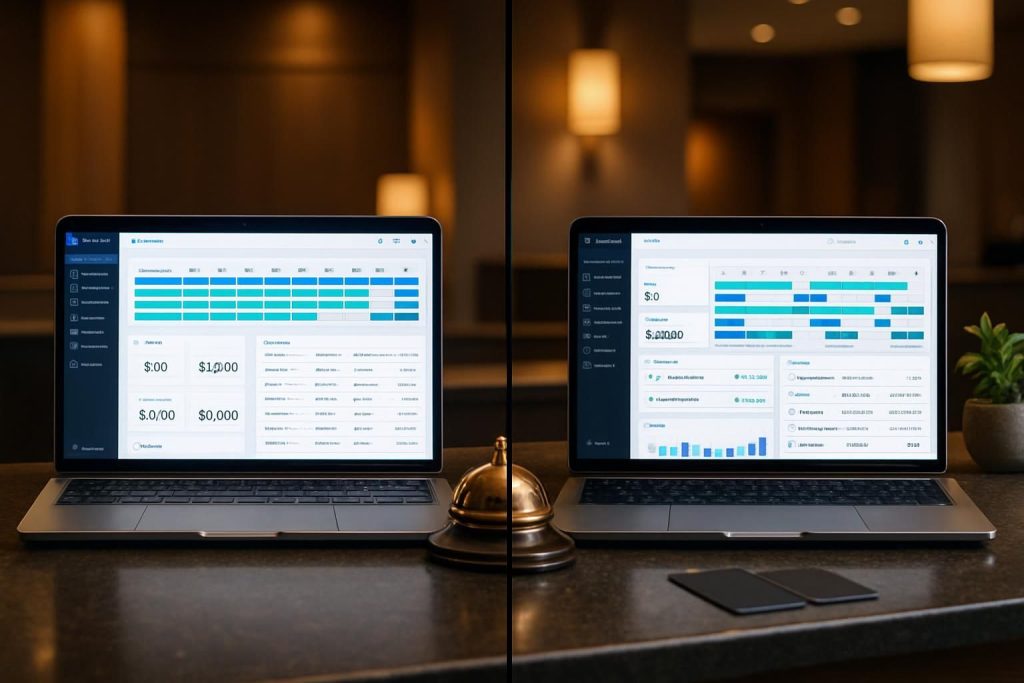
At a Glance:
Cloudbeds is designed for hotels, hostels, and multi-property operators seeking robust automation and channel management.
Hospitable is tailored for short-term rental hosts prioritizing communication automation and fast onboarding.
Both platforms streamline operations, centralize bookings, and minimize manual tasks for property managers and owners.
User interface design, scalability, and pricing structures vary significantly, making each suitable for different business models.
Integration options and analytics capabilities are key differentiators influencing property growth and profitability.
Between soaring guest expectations and the need for operational agility, lodging businesses are increasingly turning to property management software capable of doing far more than simply handling reservations. The landscape for 2026 hospitality is shaped by platforms like Cloudbeds and Hospitable, each offering a distinctive approach for managing bookings, guest communication, and multi-channel distribution. Illustrated by stories such as that of Marie, a boutique hotelier juggling direct and OTA bookings, or Alex, an Airbnb host scaling from one apartment to a dozen, it’s clear the right software profoundly impacts business potential.
Hoteliers, hosts, and property managers must weigh automation tools, integration ecosystems, interface intuitiveness, and customer service responsiveness. The decision between solutions like Cloudbeds—which boasts comprehensive channel management and inventory tools—and Hospitable—which excels in automating guest messaging and personalized workflows—has grown increasingly nuanced. Underpinning this comparison is the quest to align software strengths with accommodation styles, business aspirations, and operational scale. As technology continues to evolve, flexibility and data-driven management have never been more crucial to maintaining a competitive edge.
Cloudbeds vs Hospitable: which hotel management software is best?
| Feature | Cloudbeds | Hospitable |
|---|
Cloudbeds vs Hospitable: Comprehensive Feature Comparison for Property Management
Key Functionalities and Automation Capabilities of Cloudbeds and Hospitable
Streamlining Operations and Booking Management Features
Navigating the complexity of bookings and calendar availability, Cloudbeds centralizes reservations from direct sites, OTAs, and walk-ins into a cohesive dashboard. Its drag-and-drop calendar grants visibility, empowering managers to alter stays or resolve overbookings in real time. Meanwhile, Hospitable is built for short-term rental hosts keen on efficiency—quick setup allows new users to bring listings from Airbnb, Vrbo, or Booking.com with minimal friction.
Marie, running her 30-room inn, benefits from Cloudbeds’ integrated payments and night audit modules. Alex, scaling through Hospitable, automates check-in instructions and scheduled messages, reducing guest inquiries by 50%. Both platforms reduce administrative burden, yet each targets different operational scenarios—Cloudbeds for full-service properties, Hospitable for agile, guest-focused rentals.
Channel Management and Inventory Distribution Effectiveness
Cloudbeds stands out for its channel manager syncing inventory and rates with 300+ OTAs. This feature is invaluable for operators needing real-time parity across booking channels; a rate change on Cloudbeds reflects instantly on Expedia, Airbnb, and more. Hospitable integrates with key marketplaces, but its distribution capabilities are oriented towards fewer, high-impact channels, prioritizing speed and communication over inventory granularity.
Consider a bed-and-breakfast using Cloudbeds to push last-minute deals to OTAs during off-seasons, compared to a vacation rental host with Hospitable who relies on automated calendar blocking when a home is booked on Airbnb. In both, misbookings drop, but Cloudbeds’ reach is broader for businesses scaling across diverse channels.
Automation Tools to Enhance Guest Experience and Reduce Manual Tasks
Guest journey automation is a hallmark for both, but their approaches differ. Hospitable excels with customizable messaging sequences (check-in, checkout, reviews, troubleshooting), automatically adapting to reservation particulars. Hosts can preemptively address guest needs and foster positive reviews with little intervention.
Cloudbeds offers workflow automation for invoicing, housekeeping management, and guest profile creation. For large hotels, automations unlock staff efficiency and reduce time spent on repetitive chores. Both platforms thereby allow accommodation providers to revert focus to personalized service and business development, highlighting the dramatic shift from manual administration to proactive hospitality management.
Feature | Cloudbeds | Hospitable |
|---|---|---|
Channel Manager | 300+ OTA, real-time sync | Airbnb, Vrbo, Booking.com, focused sync |
Guest Messaging Automation | Integrated, with less customization | Highly customizable, rules-based |
Reporting & Analytics | Advanced dashboards & exports | Essential metrics, user-friendly |
Multi-property Management | Native, scalable up to 100s of units | Supports small portfolios efficiently |
User Experience and Interface Design: Evaluating Cloudbeds vs Hospitable
Ease of Use and Customization Options for Daily Hospitality Management
User Interface Design and Intuitiveness for Property Owners and Managers
User experience is crucial for business efficiency, particularly when onboarding new staff or scaling guest volumes. Cloudbeds features a robust interface tailored for hoteliers accustomed to management software, layering complex functions under organized menus. This can present a short learning curve but ultimately facilitates in-depth control.
By contrast, Hospitable is lauded for its crisp, intuitive navigation—its dashboard prioritizes immediate access to active reservations, automated tasks, and guest communications. Alex, with his expanding rental portfolio, finds Hospitable less intimidating: no-frills design supports fast onboarding, allowing hosts to respond instantly to booking alerts or guest questions.
Personalization and Adaptability to Different Accommodation Types
The ability to customize workflows and adapt software to fit unique property models is crucial. Cloudbeds provides flexible rate types, custom fields for guest data, and the option to brand communications, making it suitable for everything from boutique hotels to hostels.
Hospitable’s strength lies in easy customization of automation templates by property, reservation type, or guest segment. For example, messages can differ for business travelers vs. vacationing families, maximizing relevance and satisfaction. Both platforms reflect a recognition that the accommodation landscape is far from one-size-fits-all.
Cloudbeds supports extensive property types through layered customization and advanced PMS tools.
Hospitable excels in swift adaptation to short-term rental needs and personalized guest touchpoints.
Multi-Property Management Support and Scalability Considerations
Growth strategies in hospitality demand tools that can seamlessly scale. Cloudbeds empowers multi-unit managers through portfolio-level controls, consolidated dashboards, and centralized reporting. Its architecture is ideal for hotel chains, serviced apartments, or owners growing into multiple markets.
Hospitable caters primarily to hosts operating a handful of listings, though its multi-property panel makes it easy to replicate automations and settings. While not designed for complex hotels, it’s agile in supporting growth up to dozens of short-term rentals, ideal for investors or property management companies expanding across cities.
Pricing Structures and Target Audiences: Which Fits Your Hospitality Business Best?
Comparing Pricing Models and Value Propositions
The clarity and predictability of pricing impacts budget planning and ROI. Cloudbeds employs a custom-quoted pricing model based on property size and functionality requirements, often charging per room or property. This can be advantageous for larger operators who value all-in-one packages.
Hospitable offers transparent, tiered subscription plans determined by number of active listings—ideal for hosts scaling from one to dozens of rentals. Flat-rate simplicity supports fast decision-making for those new to the space or managing fewer properties.
Suitability for Small, Medium, and Large Scale Property Management
Small B&Bs and boutique hotels might find Cloudbeds’ set of features initially dense but ultimately rewarding as they grow. Large-scale managers benefit from its ability to oversee vast inventories and generate granular reports. Hospitable, streamlined and cost-efficient, delivers quick wins for small operators, but may ultimately require supplementing as businesses branch into new markets.
Ideal Business Types and Accommodation Categories for Each Platform
Cloudbeds is a natural match for hotels, inns, hostels, and chained properties seeking an integrated approach with advanced rate management and regulatory compliance tools. In contrast, Hospitable is tailored to short-term rental operators, property managers, and investors prioritizing direct guest engagement and minimal setup.
A vacation rental startup, for instance, can leverage Hospitable’s automations to turn guest satisfaction into glowing reviews; meanwhile, a heritage hotel can rely on Cloudbeds’ seamless integration of booking channels and staff workflows to deliver consistent excellence.
Scalability and Growth Potential Across Different Hospitality Segments
Cloudbeds’ modular architecture grows with businesses, supporting everything from solo motels to franchised chains, backed by future-proof APIs for integration with emerging travel tech in 2026. Hospitable, while highly efficient at a smaller scale, is less suited to the layered requirements of large lodging portfolios but shines for solopreneurs and localized teams.
Strategically, operators with ambitions to cross borders or diversify inventory will appreciate Cloudbeds’ scalability. Meanwhile, entrepreneurs prioritizing low overhead and exceptional guest messaging automation will find Hospitable a compelling first step.
Business Model | Cloudbeds Fit | Hospitable Fit |
|---|---|---|
Chain Hotels | Excellent | Limited |
Short-term Rentals | Capable but complex | Optimal |
Boutique Hotels | Very good | Average |
Vacation Rental Multi-City | Highly scalable | Easy up to 50 units |
Integration, Reporting, and Customer Support: Cloudbeds vs Hospitable Analysis
Software Integrations and Compatibility with Hospitality Tools
Both systems recognize that integration capability is non-negotiable. Cloudbeds offers an expansive marketplace of integrations spanning POS, revenue management, guest communications, and smart locks. Its API enables custom connections to third-party platforms—key for operators with unique systems or advanced analytics needs.
Hospitable focuses on high-impact integrations most relevant to independent hosts: payment solutions, guest screening tools, and housekeeping automations. Seamless synchronization with Airbnb and similar platforms reduces tech headaches for less technical users, but advanced custom integrations are more limited compared to Cloudbeds.
Cloudbeds vs Hospitable
Integrations Supported
Shows the number of third-party system integrations.
Support
- 24/7 multilingual support
- Live chat & email
- Responsive chat & email
Analysis & Reporting
Reporting and Analytics Features to Drive Data-Informed Decisions
Data-driven management separates thriving businesses from those operating on intuition. Cloudbeds delivers robust, customizable reports on revenue, occupancy, channel performance, and guest demographics, supporting high-level strategy and day-to-day decisions. Scheduled exports and interactive dashboards help Marie analyze trends and adjust marketing spend.
Hospitable offers streamlined reports focused on operational essentials: booking velocity, earned revenue, and guest response times. While not as exhaustive as Cloudbeds, it provides instant visibility into booking health—crucial for busy hosts monitoring nightly performance rather than year-on-year growth curves.
Customer Support Quality and Responsiveness Comparison
Meeting support expectations reflects a provider's commitment to long-term partnership. Cloudbeds boasts 24/7 multilingual live support and in-depth help resources—vital for global operators working across time zones and languages. Users report reliable onboarding guidance and problem resolution.
Hospitable emphasizes fast, personalized assistance via live chat and email. Hosts value its dedicated onboarding guidance and approachable community, where sharing tips and use-cases is frequent. While direct phone support is limited, its service pace meets the needs of time-sensitive short-term rental operators.
Cloudbeds is best for complex support scenarios or international expansion, with layered support tiers.
Hospitable suits agile hosts who value prompt, clear, and digital-centric interactions.
Can I use Cloudbeds or Hospitable for both hotels and vacation rentals?
Yes. Cloudbeds is designed for hotels, hostels, and multi-property setups but can adapt to vacation rentals. Hospitable is best suited for short-term rentals, though small-scale boutique properties may also benefit.
Which platform offers better automation for guest messaging?
Hospitable leads in guest messaging automation with highly customizable and event-triggered communication tools, particularly valuable for Airbnb and Vrbo hosts.
How do Cloudbeds and Hospitable differ in channel management?
Cloudbeds provides broader OTA integration and real-time inventory distribution, supporting 300+ channels, while Hospitable focuses on key platforms, perfect for automating Airbnb or Booking.com management.
Is reporting more advanced on one platform?
Cloudbeds features in-depth analytics, customizable reports, and exports ideal for strategic planning. Hospitable delivers concise operational insights, sufficient for small operators or growing hosts.
Who should choose Hospitable over Cloudbeds?
Entrepreneurs with a handful of rental properties, or those scaling quickly in the short-term rental space, benefit most from Hospitable’s swift onboarding, messaging automation, and cost-effective plans.