

Two of today’s most influential platforms—Cloudbeds and Lodgify—promise to transform hotel management by offering robust booking, automation, and integration features matched to a range of property sizes and guest expectations. As accommodation providers—from freelancers operating vacation rentals in San Diego to large enterprises running multi-property resorts worldwide—seek a competitive edge, pressure mounts to adopt software that balances flexibility, transparent pricing, and superior user satisfaction. FinancesOnline, a leader in evaluating B2B solutions, repeatedly distinguishes Cloudbeds for an outstanding SmartScore, signaling a shift in how hospitality managers assess tech investments for operational growth and customer satisfaction. Meanwhile, Lodgify’s reputation for clarity in pricing and a focus on integrations for both direct and channel booking provides compelling options for smaller, agile hospitality businesses and growing companies with complex demands. The battle for the best hotel management system now hinges on agility, seamless features, and an unwavering commitment to client needs, setting the stage for a dynamic comparison of these industry titans.
At a Glance
Cloudbeds and Lodgify both lead the hotel management software revolution with cloud-based, feature-rich platforms.
Cloudbeds stands out for its SmartScore and top user satisfaction; Lodgify impresses with transparent pricing and intuitive booking options.
Both platforms support vital integrations—from MailChimp and Facebook to PayPal, Stripe, Booking.com, and Expedia—empowering hoteliers to centralize operations and boost sales growth.
Pricing structures cater to small businesses, medium and large enterprises, and freelancers alike, with options for subscription and one-time payments.
Cloudbeds and Lodgify serve a worldwide market, offering multilingual support, responsive service, and tools for ongoing management innovation.
Comprehensive client support and vast integration ecosystems make both platforms trusted by names like La Chosa del Manglar and Tints of Blue Residence.
Industry endorsements and real-world case studies highlight both the practical and strategic advantages of each solution.
Cloudbeds vs Lodgify: Choosing the Best Hotel Management Software for Business Growth
Why Selecting the Right Hotel Management Software Is Crucial for Efficiency
Efficient hotel management software has become essential for properties of all sizes. Operational complexity—whether tracking employee shifts, managing reservations, or analyzing guest data—demands centralization and automation. Imagine a medium business like Tints of Blue Residence trying to coordinate booking calendars across Airbnb, Booking.com, and TripAdvisor without an integrated dashboard or robust channel management. The resulting chaos quickly erodes customer satisfaction and sales growth potential.
Cloudbeds and Lodgify address these operational hurdles by providing streamlined, cloud-based suites. Quick data access, intuitive interfaces, and real-time notifications ensure managers can act swiftly, while rich analytics highlight market shifts or guest trends. Choosing between these platforms isn’t just a technical decision; it creates a foundation for a property’s long-term reputation and growth.
Matching Software Features to Business Needs: Flexibility in Cloudbeds and Lodgify
Business requirements evolve rapidly. Some operators want extensive customization, while others need reliable standard features. Cloudbeds offers adjustable modules for room management, calendar synchronization, and multi-property support, enabling large enterprises to scale without outgrowing their tech stack. Lodgify, by contrast, focuses on nimble setups—perfect for freelancers managing vacation rentals who need brandable websites and seamless channel integrations without technical overhead. Both platforms let users toggle features for booking, marketing, and analytics, ensuring they align precisely with current goals and projected expansion.
This flexibility is a key differentiator—hoteliers can add advanced tools like email marketing (via MailChimp or Constant Contact) or automate payment options with PayPal, Stripe, or Authorize.net as their business matures. The ability to calibrate software capabilities directly to operational needs means hotels avoid wasteful spend and complexity, focusing resources where it matters most.
Responding to Changing Sales Dynamics with Feature Customization Options
Hospitality is notoriously dynamic. Unexpected surges in demand, emerging guest preferences, or new booking platforms require agility. Lodgify excels in letting users adjust site themes, direct booking workflows, and API-driven channel integrations on the fly. Cloudbeds stands out for its sophisticated automation: recurring pricing updates tied to demand, customized dashboard widgets, and adaptable notification systems.
As illustrated by Club Pacifico Sur, adapting quickly when international travel returned helped recover pre-pandemic booking volume. This highlights the value of being able to reconfigure features and integrations in real-time, especially when competitive edge depends on speed and customer experience.
Overview of Cloudbeds and Lodgify: Market Position and Target Audience
Cloudbeds commands a strong presence in the hotel management sector, with endorsements from FinancesOnline, industry awards, and high adoption rates among multi-property operators and established hospitality brands. Though large enterprises are a core audience, Cloudbeds’ modular setup means medium business operators and ambitious freelancers can also reap rewards, leveraging tools once reserved for large hotels.
Lodgify, in contrast, built its reputation around intuitive booking and management for vacation rentals. It attracts freelancers, small businesses, and emerging hotel operators thanks to its straightforward setup. Lodgify’s platform outpaces others in quick website deployment, direct integration with platforms like Airbnb and Booking.com, and a transparent pricing approach, making it the first choice for newcomers or agile teams keen to optimize costs.

SmartScore Ratings & User Satisfaction: Cloudbeds vs Lodgify Performance Comparison
Analyzing Cloudbeds’ Superior SmartScore and Perfect User Satisfaction
On FinancesOnline, Cloudbeds regularly secures a top-tier SmartScore and flawless user satisfaction. This reflects powerful feature alignment, high reliability, and strong reviews from seasoned hospitality managers. The system’s intuitive navigation, robust booking engine, and integrated payment processor mean fewer headaches and less staff training—an important factor for medium business owners and large hotel chains eager to minimize onboarding delays while maximizing productivity. Such accolades are bolstered by real-world endorsements, with clients like La Chosa del Manglar experiencing substantial upticks in both operational efficiency and guest feedback metrics.
Lodgify’s User Ratings: Strengths and Areas for Improvement
Lodgify also receives strong user ratings across platforms like FinancesOnline, with particular praise for its website builder, multi-calendar support, and direct integration with major OTAs like Expedia and Airbnb. Many users cite the clarity of its pricing model and the simplicity with which properties can deploy booking and management solutions. However, some reviews suggest a learning curve when integrating advanced analytics or third-party apps, signaling room for growth in support documentation and higher-end features. For freelancers and smaller operators, this trade-off remains acceptable, but medium business users with complex needs may wish for a deeper feature set.
Platform | SmartScore (FinancesOnline) | User Satisfaction | Best For |
|---|---|---|---|
Cloudbeds | 9.4/10 | 100% | Large Enterprises, Medium Business, Multi-Property |
Lodgify | 8.8/10 | 89% | Freelancers, Small Businesses, Startups |
Impact of User Feedback on Software Reputation and Trustworthiness
Reliable hotel management software depends on continuous improvement, driven by candid client feedback. Cloudbeds leverages its review-gathering across platforms like FinancesOnline and SurveyMonkey, using insights to refine user experience, automation, and integrations. Lodgify similarly capitalizes on rapid feedback channels—through Facebook, review platforms, and its support desk—to iterate features and bolster trust among small business owners and freelancers.
This ongoing loop between developers and end-users ensures that both platforms remain relevant and trustworthy, with fewer “surprises” during mission-critical processes like calendar updates, integrated payments, or guest messaging.
Comparing Customer Reviews and Ratings Across Multiple Platforms
Aggregated reviews from sources such as FinancesOnline, TripAdvisor, and SurveyPal demonstrate high satisfaction rates for both tools, though patterns emerge: Cloudbeds wins praise for integrations with complex platforms and a rich analytics suite, while Lodgify consistently scores well for setup speed and UI simplicity. User comments highlight strengths—including multi-language support and instant calendar syncing—and areas for improvement, such as custom analytics or open API documentation.
The Role of Industry Awards and Accolades in Evaluating Cloudbeds vs Lodgify
Industry recognition often predicts platform reliability. Cloudbeds features regularly among award lists for innovation, multi-property management, and payment flexibility, giving confidence to operators in markets like the USA and Europe. Lodgify, though newer, receives commendations for democratizing booking technology for independent hosts, earning endorsements from established clients and tech media. Such accolades inspire trust and attract skeptical buyers looking for proven solutions.
How User Satisfaction Influences Purchase Decisions for Hotel Software
Software procurement is shaped by more than feature lists. High user satisfaction—exemplified by Cloudbeds’ 100% rating—translates directly to positive referrals, higher renewal rates, and greater willingness to invest in advanced modules. Lodgify’s strong but slightly lower scores suggest small business and freelancer buyers prioritize transparent pricing and ease of use, occasionally trading off advanced options for simplicity. Ultimately, high satisfaction levels reduce perceived risk for first-time buyers and justify higher upfront investments for established operators.
Balancing Feature Sets and User Experience in Cloudbeds and Lodgify
Striking the right balance between rich features and seamless user experience remains central in hotel management. Cloudbeds’s robust automation doesn’t overwhelm users, thanks to a clean dashboard and accessible help resources. Lodgify’s design streamlines the journey from website launch to first successful booking, making it ideal for less tech-savvy audiences. Both companies invest in ongoing UI redesigns—often based on SurveyGizmo data—to reduce friction, ensuring practitioners quickly unlock value.
💡 Cloudbeds vs Lodgify 2025: Feature Comparison
| Feature | Cloudbeds | Lodgify |
|---|---|---|
| SmartScore | 9.4 / 10 | 8.8 / 10 |
| User Satisfaction | 100% | 89% |
| Pricing | Quote-Based | Transparent Starting Price |
| Best For | Large/Medium Businesses | Freelancers/Small Businesses |
Long-Term Client Retention Rates and Their Link to User Contentment
Client loyalty profoundly impacts software evolution and industry reputation. Cloudbeds’s impressive retention among prestigious properties—like Tints of Blue Residence and Club Pacifico Sur—reflects its adaptability and broad management suite. Lodgify retains a loyal base among agile rental proprietors, where client contentment often results in social media advocacy and repeat solution upgrades. Both companies showcase high renewal rates, underlining the pivotal role of satisfaction in long-term vendor relationships.
Effective Support Channels and Their Impact on User Satisfaction Scores
Responsive support is a major determinant of user satisfaction. Cloudbeds offers a comprehensive array of live chat, phone, email, and detailed help documentation, reducing downtime and user frustration. Lodgify complements its onboarding tutorials with fast-response email and 24/7 ticketing, though some complex issues may require escalation. Both platforms benefit from active online forums and ongoing training resources—especially valuable for those new to property management tech.
Pricing Models & Payment Plans: Comparing Cost Efficiency of Cloudbeds and Lodgify
Lodgify Pricing Transparency: Understanding the Starting Price and Inclusions
Lodgify is lauded for its clear, upfront pricing. Users can view starting rates, what’s included (from direct booking widgets to a branded website), and any optional add-ons before committing. For example, freelancers and small businesses appreciate being able to predict monthly management expenses, vital for tight budgets.
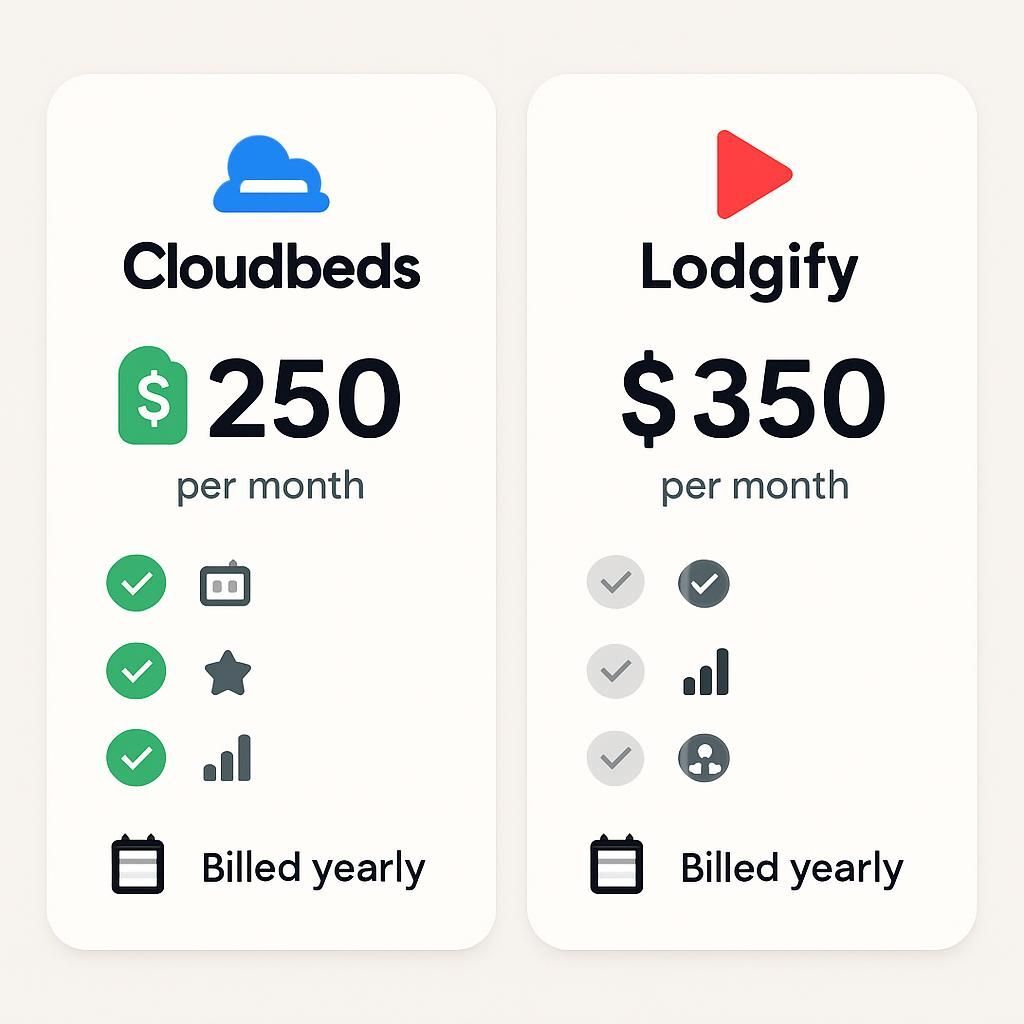
Cloudbeds’ Quote-Based Pricing Explained: Benefits and Drawbacks
Cloudbeds employs a quote-based pricing strategy. While this model offers tailored proposals aligned with company size and feature selection, the lack of upfront figures may deter some cost-conscious buyers. The model is designed to accommodate larger operations or properties with complex requirements by providing custom packages—including integrations for payment gateways, channel management, and analytics. For medium businesses or multi-property hotels, this bespoke approach ensures only useful features are paid for, but starts with a consultative sales process rather than instant sign-up.
Monthly Subscription vs One-Time Payment Options Across Both Platforms
Both Lodgify and Cloudbeds offer monthly subscriptions to support evolving property management needs. While monthly plans foster flexibility, some Lodgify clients opt for discounted annual packages, providing additional value for operators confident in long-term use. One-time payment options, rare but occasionally extended in enterprise agreements, may appeal to established hoteliers seeking perpetual access and lower recurring charges.
Accessing Advanced Features: Are There Additional Fees for Cloudbeds or Lodgify?
Additional charges often accompany advanced features. Lodgify lists its premium modules—like channel manager integrations or email automation—as clear upgrades. Cloudbeds quotes typically reflect all feature requests, including premium analytics, integration with CRM systems like Salesforce, or payment gateways such as Stripe and First Data. Transparent communication of these fees is crucial for budgeting and avoiding surprises as needs expand.
How Pricing Structures Align with Small Businesses to Large Enterprises
Pricing flexibility allows both platforms to attract a diverse clientele. Lodgify’s fixed-price tiers cater to freelancers and small business operators needing rapid deployment. Cloudbeds is built for scaling, working closely with medium business and large enterprises to engineer bespoke packages—ensuring advanced management tools and integrations are never out of reach as the operation grows.
Vendor | Pricing Model | Includes | Advanced Options |
|---|---|---|---|
Cloudbeds | Quote-Based | Reservation, Channel Management, Calendar, Payment | CRM, Third-Party Integrations |
Lodgify | Transparent Tiered | Booking Engine, Website Builder, Multi-Calendar | API, Email Automation |
Evaluating Return on Investment: Price versus Feature Value in Hotel Software
Ultimately, buyers seek tangible value. Cloudbeds’s customizable pricing matches advanced features like multi-property management, advanced calendars, or payment integrations to client priorities. Lodgify’s straightforward plans deliver ROI through lower upfront costs and fast deployment—ideal for smaller operators or those testing new markets. Calculating long-term benefits (e.g., reduced errors, improved booking rates) is as important as comparing price tags.
Discounts, Free Trials, and Money-Back Guarantees Offered by Cloudbeds and Lodgify
Lodgify frequently runs promotional discounts and advertises a risk-free trial—letting users sample its booking engine before subscribing. Cloudbeds similarly extends trial access in some markets, with consultative onboarding to ensure fit before commitment. Money-back guarantees vary based on plan; buyers should verify terms during negotiation.
Contract Terms and Cancellation Policies: What Users Should Know
Each company delivers clear contract terminology, with Lodgify excelling in no-penalty cancellation for monthly subscribers. Cloudbeds negotiates contract terms on a per-client basis, providing flexibility for large implementations but requiring careful review. Both vendors are transparent about renewal, upgrade, and cancellation logistics—key factors for risk mitigation.
Feature Set, Integrations & Support: Deep Dive into Cloudbeds vs Lodgify Capabilities
Core Features Comparison: Reservation, Scheduling, and Channel Management
Both Cloudbeds and Lodgify offer a comprehensive roster of features, including robust reservation handling, scheduling tools, and powerful channel management. Cloudbeds excels in integrating calendar and resource management across multiple booking sites (Booking.com, Airbnb, Expedia). Lodgify’s multi-calendar ensures freelancers can track bookings across platforms in real time. These features minimize double-bookings and automate complex guest routing, even during peak season.
Multi-Currency and Real-Time Notification Advantages in Both Platforms
In a globalized market, multi-currency processing and instant notifications are non-negotiable. Both platforms enable seamless payment in various currencies, integrating with Stripe, PayPal, CyberSource, First Data, and more. Real-time alerts—whether for new bookings, payment confirmation, or cleaning schedules—improve staff responsiveness and bolster guest confidence.
Unique Tools: Customization, Marketing Integrations, and Analytics Innovations
Cloudbeds distinguishes itself with advanced customization, enabling operators to tailor the dashboard, automate reporting, and connect with marketing powerhouses like Facebook, MailChimp, and Google Analytics. Lodgify’s strong suit lies in quick-launch website templates, Google Calendar integration, and email marketing alignment. Both platforms support seamless social sharing and offer analytics to refine guest targeting and yield management strategies.
Cloudbeds: Deep analytics, customized notifications, multi-property resource allocation
Lodgify: Fast website builder, comprehensive API, seamless integrations with third-party apps
Supported Devices and Operating Systems: Flexibility for Every User
Flexible access is crucial. Both Cloudbeds and Lodgify operate cross-platform, supporting Windows, macOS, iOS, Android, and web access. Compatibility across devices grants managers and staff freedom to work from laptops, tablets, or mobile phones—crucial for decentralized teams in large enterprises and freelancers alike.
Target User Profiles: Freelancers, Small Businesses, and Large Enterprises
Cloudbeds’s modular design appeals to everyone from freelancers managing boutique vacation rentals to large enterprises with hundreds of rooms. Lodgify carves out its niche among agile entrepreneurs and small business upstarts needing fast launches with as little friction as possible. Both platforms serve medium business with expanding unit counts, providing scalable solutions from initial property onboarding to portfolio-wide rollouts.
Extensive Integration Ecosystem: Connecting with Marketing, CRM, and Payment Tools
Integration capabilities play a pivotal role in achieving management synergy. Cloudbeds offers direct connections with Salesforce, Dropbox, Authorize.net, QuickBooks Payments, Gmail, and superlative payment solutions. Lodgify’s API promotes rich ecosystem compatibility, allowing synchronization with Capsule CRM, Wix.com, SurveyPal, and Google Docs. Both platforms quickly incorporate third-party apps for enhanced analytics, guest messaging, and calendar sharing.
Cloudbeds’ Integration with Leading Third-Party Platforms
Cloudbeds connects with SiteMinder, Oracle Hospitality, Hotelogix, WebRezPro, The Booking Factory, GuestCentric, Base7booking, Rent Manager, Peek Pro, Acuity Scheduling, SimplyBook.me, Squarespace, SuperSaaS, Booker, Shedul, YouCanBook.me, Xola, Checkfront, Reservio, Mews Commander, TRACK Hospitality Software, ResBook, and Skyware Systems. The result is a highly flexible system for any client’s unique stack.
Lodgify’s Open API and Seamless Connectivity Options
Lodgify emphasizes open integration, supporting Despegar, Airbnb, Booking.com, Expedia, Facebook, MailChimp, and Constant Contact. Open API options foster bespoke workflows, merging proprietary apps or custom-built modules as necessary.
Global Usability: Languages Supported by Cloudbeds and Lodgify
Both platforms cater to an international audience, with over 10 languages supported including English, Spanish, French, German, and Portuguese. This multilingual approach ensures global usability, allowing seamless adoption by teams in diverse markets—from San Diego to Buenos Aires.
Customer Support Overview: Live Assistance, Email, Phone, and Training Resources
Cloudbeds delivers 24/7 live chat, direct phone access, and a thorough knowledge base, supporting new launches and ongoing staff training. Lodgify provides a responsive email desk, live onboarding sessions, and emergency ticketing—crucial for small teams needing non-stop booking uptime. Training videos, community forums, and documentation mitigate adoption hurdles and reinforce industry best practices.
Ticketing Systems and Self-Help: Ensuring Continuous User Support
Both Cloudbeds and Lodgify maintain automated ticketing systems, empowering users to log issues, monitor progress, and access resolutions at any hour. Self-service centers stock FAQs, troubleshooting guides, and product announcement hubs.
Notable Clients and Industry Endorsements: Building Trust in Both Solutions
Cloudbeds boasts a client roster including Tints of Blue Residence and Club Pacifico Sur, underlining trust with growing international hotels. Lodgify is celebrated by agile hosts like La Chosa del Manglar, praised for simplifying world-class management in resource-constrained settings. Both benefit from endorsement by platforms such as FinancesOnline and hospitality events, reinforcing market authority.
Company Reputation & Background: Cloudbeds’ Award-Winning Status and Market Footprint
Cloudbeds’s USA headquarters and consistent award wins—spanning management innovation and customer satisfaction—have cemented its reputation. Lodgify, while more startup-oriented, is recognized for enabling rapid digital transformation and for its support of global freelancers and property managers. Case studies reveal operational improvements and guest experience uplift across the client spectrum.
Evaluation Criteria by Industry Experts: Features, Security, Mobile Compatibility
Analysts at FinancesOnline and other B2B review sites rely on rigorous frameworks: features range comparison, security protocols, GDPR compliance, customer support quality, and mobile compatibility. Practical tests on onboarding ease and uptime metrics inform ranking decisions and ultimately influence procurement choices for buyers in every market segment.
Balanced Perspective: Helping Buyers Make Informed Decisions Between Cloudbeds and Lodgify
Buyers must weigh robust calendars, transparent pricing, diverse integrations, and support responsiveness. Cloudbeds excels for sophisticated, multi-property demands and analytics-driven operators. Lodgify shines with rapid launches and simple, accessible pricing fit for freelancers and emerging hotels. Informed buyers align platform strengths with their management priorities, confident they’ll deliver memorable guest experiences and scalable sales growth.
What types of properties can use Cloudbeds and Lodgify?
Both Cloudbeds and Lodgify are optimized for properties of all sizes; from freelancers managing single vacation rentals to large enterprises with multi-property portfolios.
How do Cloudbeds and Lodgify handle third-party integrations?
Cloudbeds connects with a vast array of third-party platforms like Salesforce, SiteMinder, and payment providers, while Lodgify leverages open API access and direct links to Airbnb, Booking.com, Facebook, and more.
Is multilingual and multi-currency support available for global clients?
Yes, both platforms support multiple languages and currencies, making them ideal for international operations and enhancing guest experience everywhere.
Do both Cloudbeds and Lodgify provide free trials or demo periods?
Lodgify clearly advertises free trial periods and special promotions, while Cloudbeds often provides demos or onboarding trials via its consultative sales approach.
Which platform offers superior customer support?
Cloudbeds is often praised for 24/7 live support and extensive training, while Lodgify is recognized for its responsive email desk and thorough onboarding resources. Both platforms rate highly for ongoing user satisfaction.