
The ultimate channel manager comparison for 2026
The bottom line: Switching to real-time API connectivity is the ultimate move to kill double-booking nightmares for good. 🛑 This technical brain centralizes distribution, turning a chaotic mess into a streamlined revenue machine so you can finally relax. Whether it’s SiteMinder’s 93% satisfaction rating or STAAH’s 1,000+ partners, picking the right tool for your specific property size is the secret to scaling fast! 🚀
Does the nightmare of double bookings and the soul-crushing grind of manual updates make you wish for a definitive comparison channel manager to save your sanity? This guide cuts through the industry noise to reveal exactly which software delivers the lightning-fast real-time API sync and deep PMS integration your specific property needs to thrive. Whether you are eyeing SiteMinder or the all-in-one simplicity of Cloudbeds, we break down the hidden traps and secret weapons that will finally help you maximize your margins while reclaiming your precious time right now. 🚀
- Picking Your Winner: The Channel Manager Comparison That Actually Matters
- SiteMinder: Why the Big Players Still Bet on This Engine
- Is Eviivo the Secret Weapon for Independent Property Owners?
- Cloudbeds: The 3 Reasons It Dominates the All-in-One Space
- Uno Connect: Scaling Distribution for Massive Hotel Groups
- STAAH and RateTiger: Specialized Tools for the Revenue-Obsessed
- Beyond the Price Tag: 4 Hidden Traps in Channel Management
- Summary Comparison of Top Channel Managers
Picking Your Winner: The Channel Manager Comparison That Actually Matters
Managing online distribution feels like a circus act. Finding the right fit in a comparatif channel manager isn’t about pretty buttons; it’s about the central brain handling the chaos.
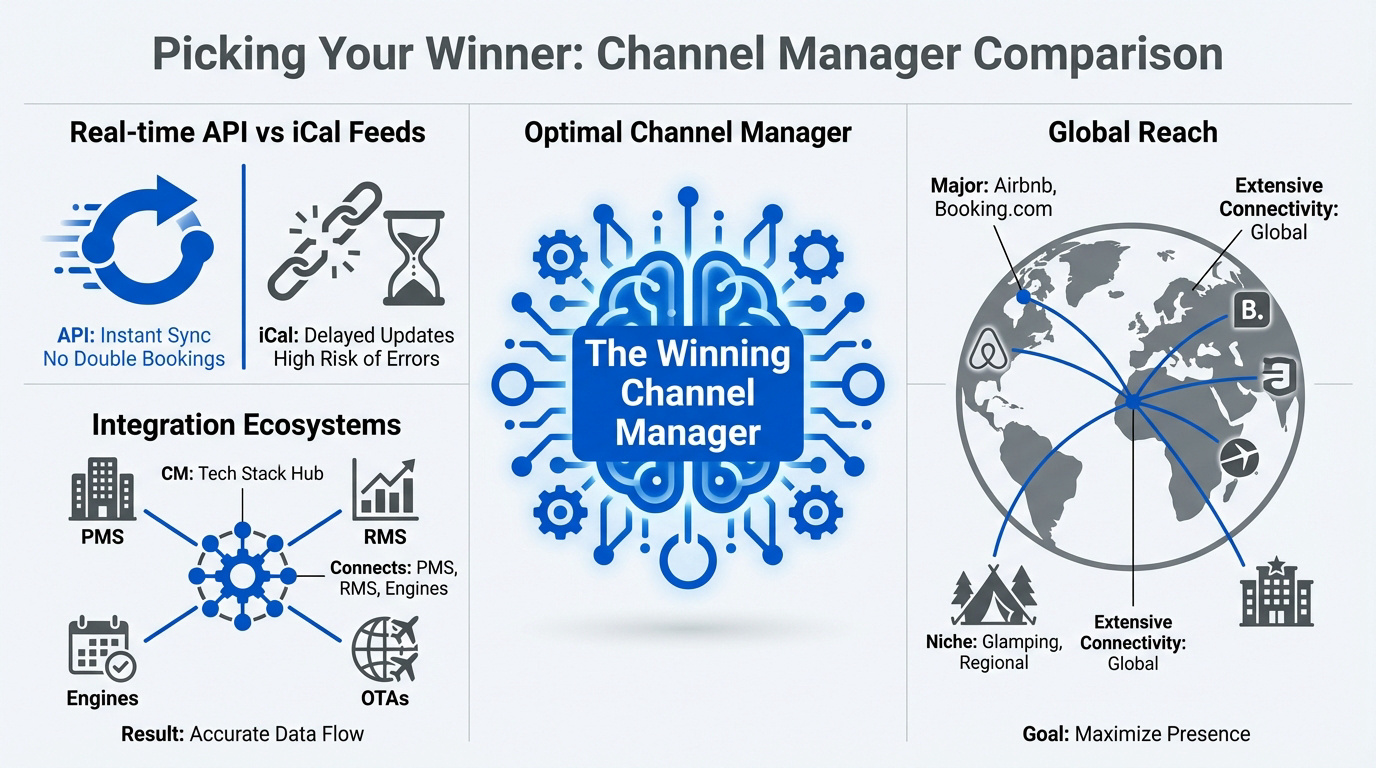
Real-time API vs the slow death of iCal feeds
Tech Check: API vs iCal
API offers two-way real-time sync (instant). iCal relies on calendar polling (delayed), creating a dangerous window for double bookings.
APIs push data instantly between your systems. iCal just pulls updates at fixed intervals. This technical gap is massive. One is live, the other is a ghost. It makes the difference between success and total chaos.
API speed stops double bookings cold. During high-occupancy periods, every single second counts. You can’t afford a 30-minute lag when travelers are clicking “book” simultaneously across different sites.
Professional hosts using iCal face massive risks. Lost revenue and guest dissatisfaction destroy your reputation. It is a recipe for disaster that most smart managers avoid in today’s fast-paced market.
Integration ecosystems: PMS, Booking Engines, and RMS
Think of the channel manager as the glue. It connects your internal PMS to the outside world. Without it, your entire tech stack falls apart when things get busy.
Data flows seamlessly between inventory management and revenue tools. Rates move from the RMS through the manager. Then they hit the OTAs instantly. This happens without you lifting a finger, keeping your pricing sharp.
Deep connectivity kills manual entry errors. Staff fatigue vanishes when data is 100% accurate. You save time and money while keeping your team focused on the guests instead of spreadsheets.
Global reach: from Booking.com to niche glamping sites
Booking.com, Expedia, and Airbnb are the big three. You need them to survive in this market. They are the non-negotiable foundation for any serious property owner looking for growth.
- Agoda is vital for Asian market visibility and growth.
- Specialized sites for glamping or luxury properties attract big spenders.
- Niche channels often yield much higher margins than big OTAs.
- Reach specific audiences without the usual fierce OTA competition.
Centralized ARI management gives you a massive market presence. You are everywhere at once. Yet, you aren’t working more hours to manage the extra bookings coming from these diverse sources.
SiteMinder: Why the Big Players Still Bet on This Engine
Moving from the general concept of distribution to the most established player in the market, SiteMinder stands out as the heavy hitter for a reason.
Preferred Partner status and what it means for your visibility
Being a Preferred Partner isn’t just a badge. It means rock-solid stability and data processing that actually keeps up. Your rates hit the OTAs before the competition even wakes up.
Social proof matters. That 93% rating on HotelTechReport for boutique and luxury segments isn’t a fluke. It confirms they handle large-scale operations with total reliability for serious players.
High-quality connectivity isn’t optional. Better sync directly improves your search rankings on OTA platforms, putting your rooms front and center.
Managing boutique and luxury inventory without the headache
Boutique hotels in the city can’t afford mistakes. Managing complex room types requires surgical precision. You need a system that handles luxury inventory nuances without ever breaking a sweat.
SiteMinder excels as a stand-alone model for properties with sophisticated PMS needs. It slides into complex tech environments, handling the heavy lifting while you focus on the guest experience.
Speed is everything for high-value suites. Instant updates prevent the nightmare of overbooking your most expensive inventory during peak times.
The stand-alone advantage for existing tech setups
You don’t have to dump your current PMS to get results. SiteMinder is built for those who want power without a forced, expensive full-stack overhaul of their entire operation.
Their library of 350+ third-party integrations is a massive selling point. Connectivity is their strongest card, linking your tools into a cohesive ecosystem that functions without any technical friction.
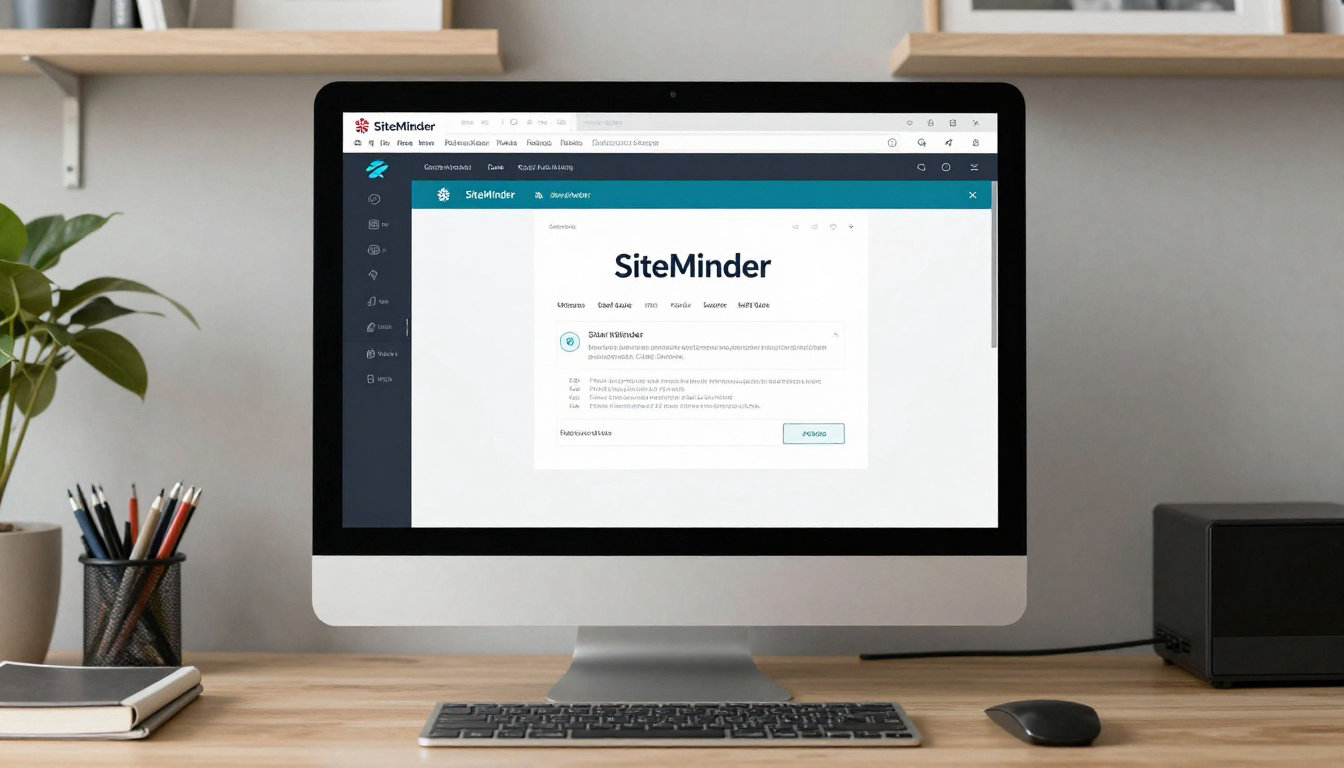
Adding new channels happens in a few clicks. You can test emerging markets instantly without worrying about technical roadblocks or downtime.
Is Eviivo the Secret Weapon for Independent Property Owners?
Forget the massive hotel chains; independent hosts need a comparatif channel manager that actually fits their reality. Bref, let’s do a quick recap: is Eviivo really your secret weapon?
Key Figures
- 4.8/5 – HotelTechReport Rating
- 4.6/5 – Trustpilot Score
- 0.50€ – Fixed Booking Fee
Automating ARI and guest messaging in one go
ARI syncs your rates and inventory while handling guest chats simultaneously. It is a dual-purpose tool for busy owners. No more tedious manual updates across different platforms.
Managing Airbnb and Booking messages in one unified inbox saves hours. You won’t miss a guest inquiry again. It keeps everything organized in one spot.
Real users on Trustpilot give it a high 4.6/5 rating. They frequently praise the simplicity and the helpful support team.
Understanding the monthly sub plus the 0.50€ booking fee
The model pairs a fixed subscription with small per-booking fees. It is a hybrid approach for growing businesses. You only pay more as you earn more.
But this often beats commission-based pricing for high-volume properties. It works out cheaper than paying a percentage of every stay. Your profit margins stay protected.
Owners enjoy the financial predictability. You know exactly what your tech costs are without any hidden surprises at month-end.
Why small hosts love the set it and forget it vibe
The interface is simple for non-technical owners to manage daily. You definitely don’t need an IT degree. It is built for people who run B&Bs, not servers.
House rules stay consistent across all OTAs. This protects your brand without extra effort. It ensures every guest knows the deal before arrival.
Daily admin tasks drop significantly for everyone. It gives time back to the hosts. You focus on guests, not screens.
Cloudbeds: The 3 Reasons It Dominates the All-in-One Space
Think “all-in-one” is just marketing fluff? Think again. When looking at a comparatif channel manager, the real winner is the one where the engine is fully native.
Native vs White-Label
Native: Built-in, single support team, tighter integration. White-label: Third-party, broader network, but more complex support.
Connecting to 300+ channels without breaking a sweat
You get access to over 300 distribution channels worldwide. From Booking to tiny niche sites, your reach stays massive. It covers every single corner of the global travel market.
Mapping your rooms to these international platforms feels surprisingly easy. The interface is built for humans, making complex setups feel intuitive. You won’t get lost in a sea of settings.
Their native engine is rock solid. No third-party middleware means fewer points of failure and way less stress.
The synergy of a native channel manager vs white-label
Technical benefits are huge here. Data moves way faster because everything stays inside one single system. You avoid those annoying lag times that lead to double bookings or pricing errors.
Support is also much better. One single team handles both your PMS and the manager. No more being bounced around between different companies when you actually need a quick fix.
Bref, native is always smoother for you and your daily operations.
Handling virtual credit cards and secure payments
Processing VCCs is a massive headache for most hoteliers. Cloudbeds handles these through the distribution channels directly. It shows you exactly when you can charge and what balance is left.
Security isn’t optional, it’s mandatory. Being PCI DSS certified means data transmission stays safe. You don’t have to worry about sensitive guest info leaking out into the wild web.
Integrated payments stop those messy discrepancies. It guarantees your money matches the booking automatically without any manual math.
Uno Connect: Scaling Distribution for Massive Hotel Groups
Time to pivot toward enterprise-level solutions in our comparatif channel manager, specifically those designed for global portfolios.
Managing 160 countries from a single dashboard
RateGain isn’t just a local player. They tackle the madness of 160 different markets without breaking a sweat. Their global reach basically keeps your distribution sanity intact across borders.
Giant chains prefer this powerhouse for international inventory. Scale demands a specialized architecture that doesn’t buckle under pressure. It’s built for the big leagues, not small-time setups.
Their GDS connectivity goes deep. Corporate bookings from platforms like Amadeus or Sabre flow in effortlessly. It’s a massive revenue stream.
Dynamic pricing rules for the international stage
Automated rate rules handle the heavy lifting. Demand-based pricing keeps you competitive in a cutthroat market. It’s all about staying sharp when rates shift every single minute.
The system syncs with your RMS for real-time updates. Your manager reacts instantly to strategy shifts. No more lagging behind while your rivals snatch up all the bookings.
Localized pricing is a total win. You can sell the same room at different prices across various regions. Smart, right?
Tackling the complexity of multi-property portfolios
HQ needs a total bird’s-eye view of the empire. Centralized control means no more jumping between tabs. You see every property from one unified, clean dashboard.
Aggregated reporting tools are the secret sauce here. Comparing performance across locations helps identify the underperformers. Data doesn’t lie when you’re looking at the big picture.
Yes, the learning curve is real. Powerful tools require training, but the ROI is honestly quite significant.
STAAH and RateTiger: Specialized Tools for the Revenue-Obsessed
Ready to move beyond basic syncing? Let’s look at tools that prioritize revenue optimization and competitive intelligence. This comparatif channel manager focus highlights how raw intelligence beats blind guesswork every single time.
1,000+ partners: STAAH’s massive distribution web
Forget small-scale syncing. STAAH hooks you up with a staggering network of over 1,000 partners. It’s easily one of the beefiest connectivity webs in the industry right now.
Why care? Because niche markets in crowded hubs won’t find themselves. Diverse partners mean you’re visible where big OTAs don’t reach. It’s smart distribution, period.
This scale builds your brand. More channels mean a stronger billboard effect across the globe. Simple as that.
RateTiger Shopper: spying on competitors for better margins
Stop guessing what the hotel next door charges. RateTiger Shopper gives you the intel to win. Knowing their prices is literally half the work done for you.
Real-time data is your best friend. You can pivot rates the second the market moves. No more leaving money on the table because you reacted too late.
Use modular integrations to hit profit goals. Just pick features you actually need. It’s lean and keeps your margins healthy without the extra fluff.
Advanced restrictions: MLOS and CTA/CTD controls
Meet the surgical tools: MLOS and CTA controls. These aren’t just settings; they’re how you dictate exactly who stays and for how long. Total control.
Big event coming? Use restrictions to guard margins. Don’t let a cheap one-night booking block a high-value weekly stay. It’s about protecting your bottom line.
Precision separates pros from amateurs. Advanced controls are a total game-changer for serious revenue managers who hate wasting inventory.
Beyond the Price Tag: 4 Hidden Traps in Channel Management
Let’s talk money. 💸 Picking a tool isn’t just about the monthly sub; you’ve got to watch out for the technical gremlins and sneaky bills that follow.
Setup fees and per-channel commissions: the math that bites
Watch those initial setup costs. Some providers bury massive implementation fees in the fine print. It’s a nasty surprise when you’re actually ready to go live.

Per-channel charges kill your ROI. Adding twenty platforms sounds brilliant until the invoice hits. Suddenly, that “cheap” tool from a comparatif channel manager feels like a luxury tax.
Watch Out!
Hidden setup fees, per-channel commissions, and mapping glitches can wreck your ROI if you aren’t careful.
Stick to predictable, transparent pricing. A flat fee is usually safer than low entry prices riddled with commission traps. 🛑
Troubleshooting sync gaps and mapping errors before they cost you
Sync failures happen. Maybe the OTA is lagging, or your mapping is just glitchy. Either way, a tiny data gap leads straight to a double-booking nightmare.
You need a real human on the phone when things break. Responsive support is everything. If they don’t answer, your reputation pays the price. 📞
Run monthly audits on your connections. A quick check-up prevents those expensive, mid-season surprises that ruin your week and your guest’s stay.
AI’s role in the next generation of guest communication
AI is taking over boring inquiries. Soon, we’ll have instant, automated replies for every guest question. It’s about speed and keeping your sanity intact. 🤖
Predictive distribution is the next big thing. Smart algorithms will decide which room goes to which channel. It’s basically revenue management on autopilot for your hotel.
The future is hands-off. The goal is to let the software do the heavy lifting while you focus on the actual guests. Bref, stay ahead!
Summary Comparison of Top Channel Managers
Which one makes the cut? Bref, let’s look at the actual numbers.
Choosing the right fit for your property type
Match your setup with the right tool. Every property has different needs. This comparatif channel manager table identifies the industry heavy hitters. 📊
| Provider | Best For | Key Strength | Pricing Model |
|---|---|---|---|
| SiteMinder | Boutique & Luxury | Large PMS ecosystem | Subscription |
| Cloudbeds | Hostels & Independents | 300+ channel integrations | Subscription |
| Eviivo | B&Bs & Independents | ARI automation | Monthly + booking fee |
| Uno Connect | Hotel Chains | 160 countries presence | Enterprise |
| STAAH | Revenue-focused | 1000+ distribution partners | Subscription |
| RateTiger | Revenue Managers | Shopper tool | Modular |
Reliability is your bread and butter. A manager that doesn’t sync perfectly is just an expensive paperweight.
Try them yourself. Free trials are the best way to see if the interface fits your daily workflow. 🧪
Pick a tool that scales with your ambitions, not just your room count.
Nailing your distribution requires lightning-fast sync, seamless integration, and global reach. Stop risking double bookings and start comparing channel management tools via free trials to find your winner today. Secure your tech stack now to enjoy automated growth and total peace of mind as you scale! 🚀
FAQ
Is there really a big difference between using an API and iCal for my sync?
Absolutely! Think of an API as a high-speed conversation happening in real-time. It uses “push” technology to send your rates and availability to OTAs the second something changes. It’s your best defense against those nightmare double bookings because it handles everything from prices to guest details instantly. ⚡
On the flip side, iCal is a bit of a slow-poke. It works on a “pull” system, meaning the booking site only checks your calendar every once in a while. Plus, it usually only syncs dates—leaving you to update prices and photos manually. If you’re serious about your business, API is the gold standard you need. 🏆
How does a channel manager actually play nice with my PMS?
It’s a total tech bromance! Your Property Management System (PMS) is the heart of your operations, while the channel manager is the megaphone telling the world you have rooms. When they’re integrated, they talk to each other constantly. A booking comes in from Airbnb, the channel manager catches it, and instantly updates your PMS. 🔄
This seamless loop means you don’t have to spend hours typing data from one screen to another. It reduces staff fatigue, kills manual errors, and ensures your inventory is always 100% accurate across the entire web. It’s basically like having a digital assistant that never sleeps! 🤖
Wait, are OTAs, GDS, and channel managers all the same thing?
Not even close! Think of OTAs (like Booking.com or Expedia) as the storefronts where travelers go to shop. The GDS (Global Distribution System) is more of a “behind-the-scenes” network that connects you to travel agents and corporate business travelers. Both are great for getting eyes on your rooms! 🏨
The Channel Manager is the “brain” that sits in the middle of it all. It ensures that whether a room sells on an OTA or through a corporate agent on the GDS, your availability is updated everywhere at once. It’s the tool that keeps your distribution strategy from turning into total chaos. 🧠
How do I actually pick the right one for my specific property type?
It’s all about finding your “perfect fit.” If you’re running a high-end boutique hotel, you might want something like SiteMinder for its massive integration library. Managing a cozy B&B? You’ll probably love Eviivo because it handles guest messaging and ARI sync in one simple package. 🏠
For the big players and international chains, a powerhouse like Uno Connect is the way to go to manage hundreds of countries. Always look at the sync speed, the number of partners they connect to (some offer over 1,000!), and how easy the dashboard feels when you’re using it. 🔍
Are there any sneaky hidden traps I should watch out for?
You bet! Always read the fine print for initial setup fees that can bite you before you even start. Also, keep an eye on pricing models; some providers charge a flat monthly fee, while others might add a small commission (like 0.50€) for every booking. 💸
Another trap is “sync gaps.” Even the best tech can have a glitch, so make sure your provider has responsive support. You want a human on the line if your mapping breaks! Regular audits and choosing a transparent provider will save you a lot of headaches—and money—in the long run. 🛡️