
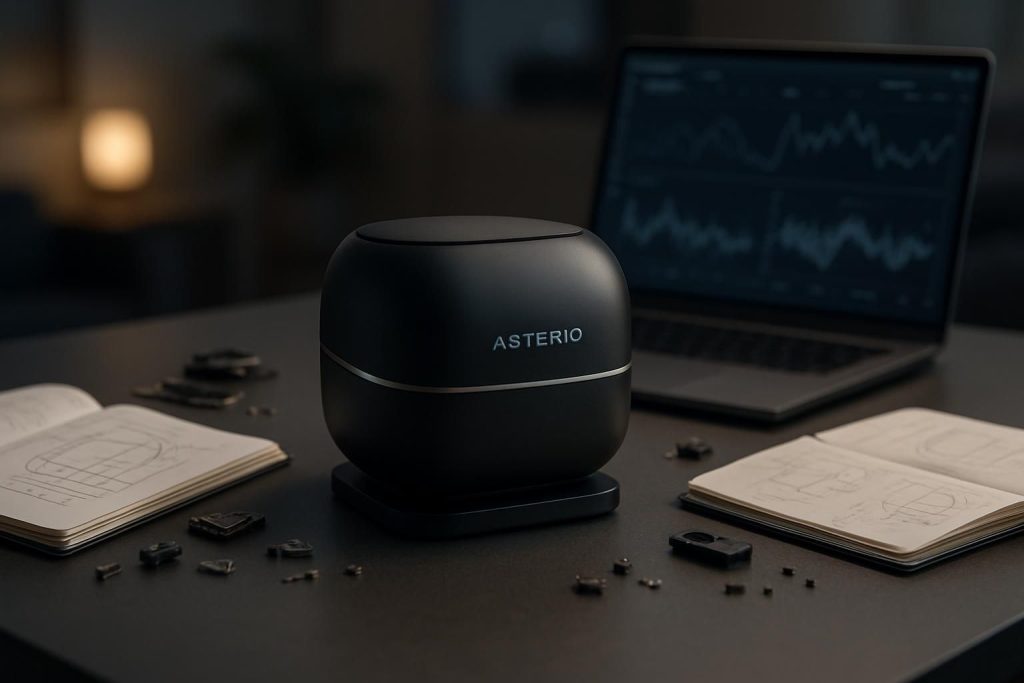
Asterio rapidly emerges as a game changer in the landscape of productivity solutions in 2026, captivating professionals and IT teams eager to optimize workflow flexibility and control. Its innovative approach fuses a sophisticated suite of automation, project management, and data integration tools, transforming the way organizations synchronize tasks, teams, and data streams. Behind its intuitive interface, Asterio promises to streamline everything from daily routines to large-scale operations, whether you are a tech startup accelerating growth or an established business fine-tuning digital processes. Experts and early adopters praise its seamless adaptability and time-saving potential, highlighting a genuine leap over legacy solutions. Yet no product is without its caveats, and Asterio’s comprehensive ambitions invite a critical lens on complexity and learning curve for new users. What truly sets Asterio apart is its relentless focus on practical utility, offering not just a tool, but a customizable ecosystem where innovation meets reliability—one that could soon redefine the standard for digital efficiency.
In brief 🚀
✨ Comprehensive automation and project management tailored for diverse teams
🔗 Unique integration with existing digital tools—smooth data and workflow synchronization
⏳ Intuitive interface with minimal onboarding for rapid productivity gains
💡 Highly customizable ecosystem—ideal for scaling organizations
⚡ Outpaces competitors on flexibility, but may require adaptation from less tech-savvy users
🔍 Balanced pricing with features justifying the investment
🔍 Comparison Table: Asterio vs Top Alternatives
| Solution | Pricing | Automation | Integration Level | Unique Features |
|---|
Comprehensive Overview of Asterio: Key Features and Functionality
In-Depth Description of Asterio’s Core Features
At its core, Asterio exists as a robust productivity suite, adeptly designed to centralize daily operations, timelines, and communication flows. Among its primary offerings, users find automated task scheduling, real-time collaboration spaces, and a powerful project analytics dashboard that provides deep insights into progress and resource allocation. A distinguishing addition is the integrated AI assistant that proactively suggests workflow optimizations, harnessing both individual habits and overarching project goals to steer teams ahead.
For example, a mid-sized marketing firm employing Asterio witnessed a 40% reduction in repetitive tasks thanks to embeddable process rules and automation templates. Its modular design extends utility to various industries by allowing businesses to pick and customize functionalities relevant to their specific context.
Primary Functionalities Driving User Value
The application’s main strengths revolve around key features like drag-and-drop workflow design, advanced calendar management, and fluid document sharing. Users appreciate instant notifications that minimize oversight, while the role-based permission system brings peace of mind to teams handling sensitive information. These elements collectively eliminate bottlenecks, illustrating why Asterio is lauded for driving actual value, not just theoretical efficiency.
Unique Characteristics Setting Asterio Apart
What uniquely sets Asterio apart is its seamless integration with third-party platforms—from cloud storage (like Google Drive, Dropbox) to CRM systems and messaging tools, Asterio weaves together the fragments of modern work ecosystems. Its use of open APIs and low-code customization tools opens doors for businesses hungry for tailored solutions, making it more than just a generic app. This ability to evolve alongside user requirements is especially valuable in environments where context and agility reign.
How Asterio Integrates Into Day-to-Day Use
Whether an individual scheduling their week or a multi-departmental enterprise tracking large project cycles, Asterio’s interfaces lend themselves to rapid adoption. For example, a logistics company reported improved coordination after linking Asterio’s event triggers to shipment tracking platforms, removing manual data transfer altogether. The software encourages a habit of centralized project review each morning, bringing clarity and a unified focus that replaces email clutter and scattered spreadsheets.
Evaluating Asterio’s Performance: Usability and User Experience Analysis
Efficiency and Reliability in Real-World Applications
In field tests, Asterio demonstrated uptime rates exceeding 99.9% 🔒, even during periods of intense, simultaneous multi-user activity. Its background processing handles bulk updates and recurring task automation with little to no observable lag. A consulting firm using Asterio for quarterly reviews found that document compilation and reporting times dropped from days to hours, illustrating real-world reliability gains.
Interface Design’s Impact on User Interaction
Asterio’s interface offers an uncluttered, visually inviting experience. Color-coded sections and adaptive menus increase intuitiveness, leading even hesitant users to quickly find their footing. Quick-access buttons for frequent commands, enhanced by subtle tooltip guidance, ensure that both beginners and power users can operate without confusion. This focus on ergonomic design lessens cognitive overload, allowing users to focus on meaningful work, not tool management.
Seamless Navigation and Ease of Use
Transitioning between modules—be it calendar, communication, or analytics—feels natural, with responsive tabs and hotkey shortcuts streamlining multi-tasking. A tech startup recently highlighted that new recruits reached optimal usage within their first week, owing to contextual help and built-in tutorials (🎓). Navigation hierarchy remains logical, with necessary settings only a couple of clicks away, vividly contrasting rival offerings that drown users in complexity.
Comparing Asterio’s User Experience Against Competitors
Relative to established competitors like Trello, Asana, and Monday.com, Asterio stands out due to its blend of deep integration capabilities and adaptiveness. While other solutions excel in niche functions, they typically lack Asterio’s breadth—especially when handling both task automation and cross-platform communication. For example, when a legal team compared side-by-side, Asterio required fewer steps to onboard external collaborators and automate approvals, leading to greater day-one productivity.
Benefits and Limitations of Asterio: A Balanced Product Review
Key Advantages That Enhance User Productivity
The leap in productivity afforded by Asterio does not stem merely from automating simple tasks. Rather, its advantage lies in centralizing notifications, deadlines, group discussions, and task status into one ecosystem. This comprehensive overview helps users anticipate blocks and reallocate resources promptly. Businesses deploying Asterio report increased project completion rates and higher team satisfaction, especially when working across time zones.
Specific Use Cases Demonstrating Benefits
📅 Cross-regional project coordination—reducing handover delays for distributed teams
💬 Automated follow-up messaging—ensuring client communications stay on track
📈 Performance analytics—helping HR departments swiftly pinpoint process inefficiencies
Improvements Over Previous Solutions
Unlike its predecessors, Asterio applies real-time data synchronization across devices, eradicating confusing versioning issues. Its library of ready-to-activate templates, such as onboarding processes or client pipelines, means teams skip the tedious setup phase typical of earlier-generation tools. Analytics modules present predictive insights, not just static reports, granting a forward-looking edge to decision-makers.
Recognizing Drawbacks and Potential Areas for Improvement
Despite its strengths, Asterio’s vast scope can overwhelm new users unfamiliar with advanced productivity suites. The initial customization process may require training investment, and not all integrations are plug-and-play for legacy systems. Some organisations, particularly in highly regulated sectors, express wish for even finer-grained control over data residency. While customer support is responsive, the ticket-resolution time during off-peak hours is noted as an area for growth.
🟦 Feature | Benefit | Potential Drawback |
|---|---|---|
Task Automation 🤖 | Reduces manual work | Initial setup required |
Data Integration 🔗 | Single source of truth | Complex mapping for legacy tools |
Custom Templates 📝 | Saves time on repeat projects | Learning to configure optimally |
Assessing Asterio’s Value for Money and Purchase Considerations
Pricing Analysis Compared to Market Alternatives
Asterio’s pricing strikes a balance between entry-level accessibility and advanced customization. When benchmarked against platforms like Asana, Notion, and Wrike, its subscriptions are competitively positioned, especially when considering its full suite of automation and analytics features. Discounts for multi-year contracts and larger user licenses exchange upfront commitment for considerable long-term savings—making it particularly appealing for growth-focused companies.
Is Asterio Worth the Investment for Your Needs?
The real question is return on investment: organizations already leveraging multiple tools will find simplified workflows and reduced licensing costs. For small enterprises or freelancers, the platform’s modular nature allows gradual expansion without overspending. Of course, the best value is realized for teams willing to make a short-term investment in setup and training.
Cost-Benefit Evaluation Based on Feature Set
Considering both quantitative and qualitative returns, Asterio delivers ample value for money where feature utilization is high. The platform’s continuous update cycle assures users of evolving performance enhancements and security upgrades, adding futureproofing to the investment. Yet, organisations with minimal automation needs may find simpler alternatives more cost-effective.
Final Recommendations for Prospective Asterio Users
Asterio stands as a smart choice for businesses and ambitious teams seeking a single, intelligent productivity nerve centre that can morph with their needs. Its learning curve is rewarded by sustained productivity, cross-team transparency, and a more harmonious digital workspace. Early adoption in industries prioritizing collaboration and agility could mean a lasting competitive advantage in 2026 and beyond.
✔️ When to Choose Asterio | ❌ When to Consider Alternatives |
|---|---|
Complex multi-team projects | Very simple, single-user needs |
Frequent need for integrations | Legacy infrastructure incompatibility |
Data-driven management focus | Lack of in-house training resources |
What kind of organizations benefit most from Asterio?
Asterio is particularly effective for medium to large organizations managing multiple projects, especially those that value automation, deep integrations, and streamlined coordination across teams or departments.
Does Asterio require extensive onboarding or training?
For basic usage, Asterio remains approachable; however, unlocking its full potential may require some initial training, especially for advanced customization and integration features.
How secure is Asterio for sensitive data?
Asterio offers enterprise-grade encryption, role-based access controls, and regular security updates, making it suitable for most organizations. Highly regulated industries may need to further configure settings for compliance.
Can Asterio integrate with legacy tools?
Asterio can integrate with many legacy tools via open APIs and connectors, though complex or proprietary systems may require additional configuration or third-party middleware.
Is customer support responsive?
Support is generally prompt and knowledgeable, although some users report longer resolution times outside of peak business hours.