
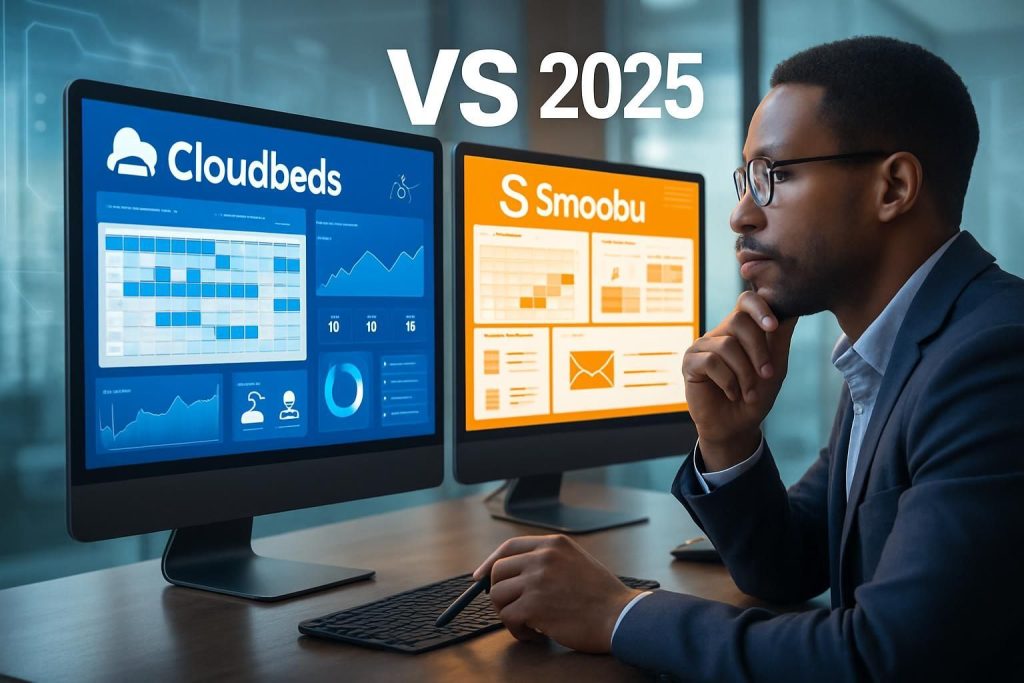
Cloudbeds vs Smoobu has emerged as one of the most hotly debated battles in the evolving vacation rental software space. With travelers demanding seamless experiences and operators seeking optimal efficiency, the tools powering rental businesses are more critical than ever. Owners and managers, from charming countryside retreats to bustling urban apartments listed on Airbnb and Booking.com, now evaluate platforms not only for power and integrations—but also for user-friendliness and support quality. Over the last year, Smoobu’s momentum has become unmistakable, especially among independent hosts determined to grow direct bookings and cut commission costs. At the same time, Cloudbeds is a mainstay for larger, multi-unit operations prioritizing traditional hotel workflows. Each platform’s approach to channel management, website building, mobile access, and customer care can drive—or impede—business growth. This comprehensive analysis unpacks those critical differences, weaving in real-world narratives from property managers and drawing sharp contrasts that clarify who truly benefits from each system now—and in the near future.
At a Glance:
Smoobu delivers real-time availability synchronization across numerous OTAs, making it ideal for vacation rental hosts seeking automation and fewer double bookings.
Cloudbeds is tailored to larger properties and hotels, with complex integration flows and a more robust but sometimes less intuitive setup.
Smoobu offers an all-in-one, commission-free website builder with instant customizations and strong SEO, while Cloudbeds imposes template limits and slow editing pathways.
Mobile management is streamlined on Smoobu’s apps, which include push notifications and live calendar updates; Cloudbeds splits key functions across separate apps, leading to usability concerns.
For customer support, Smoobu deploys multi-channel, personalized help services, outperforming Cloudbeds’ ticket-based support, which often prolongs resolution.
Smoobu stands out for its transparent plans, free trial, and suitability for independent owners, establishing itself as the leading alternative for 2026.
Channel Management Comparison: Cloudbeds vs Smoobu for Vacation Rentals
Smoobu’s Real-Time Availability and Extensive OTA Integrations
Independent host Fiona manages six apartments across three cities, listed on Airbnb and several local OTAs. Her business relies heavily on accurate calendar updates. With Smoobu, she saw immediate benefits: its real-time synchronization ensures her properties never suffer double bookings, even when last-minute changes occur. The platform connects not just with major players like Airbnb and Booking.com, but also dozens of niche sites—catering to the wide reach hosts now demand. More importantly, Smoobu’s integration flow is straightforward; OTAs can be added or removed within clicks, and the system’s background checks instantly flag any potential inconsistencies. For vacation rental owners managing multiple listings, Smoobu’s real-time engine increases trust and maximizes occupancy without the tech headaches often induced by clunky connectors.
Cloudbeds Channel Management: Hotel-Focused and Complex Integration
Cloudbeds primarily caters to traditional hotels and larger hospitality portfolios. Its channel management suite is robust, supporting a wide range of connections, yet its design favors complex, hotel-style workflows. For a boutique hotel with front-desk staff, Cloudbeds brings substantial power: batch rate updates, elaborate availability rules, and detailed restrictions. However, smaller operators often find onboarding daunting—each new channel integration may take hours and require support intervention. While Cloudbeds maintains strong connections to OTAs, including Airbnb, for a non-hotel property business, platform complexity may outweigh the advantage of sheer connectivity. If your rental model is closer to a micro-hotel, the system shines—otherwise, it can feel overengineered.
Ease of Use and Synchronization Reliability in Channel Management
Across both platforms, the distinction is clear—Smoobu’s channel manager emphasizes simplicity and reliability, syncing in real time with visual cues and transparency. Cloudbeds, while comprehensive, sometimes stumbles under its own weight; synchronization can be slower, especially when new OTAs are brought in or booking modifications cascade across multiple listings. This has led to frustration for small hosts, some of whom have shared stories of missed bookings due to sync lags.
In fast-paced rental markets, Smoobu’s lightweight workflow and instant feedback have repeatedly helped hosts avoid costly overlaps. Cloudbeds’ higher learning curve makes it more suitable for teams with IT resources or full-time revenue managers, but less attractive for side-hustle or single-owner operations.
Website Builder Features in Cloudbeds vs Smoobu: Customization and SEO Benefits
Smoobu’s Intuitive, Multilingual, Commission-Free Website Builder
Smoobu revolutionizes direct booking with its integrated website builder. Hosts launch commission-free personal sites featuring rich multimedia galleries, multilingual support, and real-time booking calendars. Editing these sites requires no design or coding background—anything from changing brand colors to updating local attraction recommendations is done instantly. Hosts like Fiona saw a 28% boost in direct bookings within three months of switching to Smoobu’s builder, driven by SEO-optimized content and no extra charges on web-generated reservations. This empowerment is pivotal; even those managing just one property can showcase their brand, accept secure online payments, and keep guest relationships independent from third-party OTAs.
Cloudbeds Website Builder Limitations and Indirect Customization Challenges
Cloudbeds offers a website builder, but its approach is far less flexible. Although templates look modern, users cannot make immediate edits to layouts or switch styles without assistance. Each customization request is submitted through the support team, which can stall site go-lives—sometimes for days.
Template Restrictions Affecting Design Flexibility
The most common complaint among operators is the restrictive choice of templates. Operators seeking to adapt quickly to seasonal offers or highlight nearby events find the design locked unless they navigate a support ticket labyrinth. For fast-innovating hosts, such friction may put them at a disadvantage in capturing last-minute, seasonal guest traffic.
User Frustrations Due to Lengthy Customization Processes
Case studies over the past year reveal long wait times and incomplete adjustments, as users try to match digital branding to their physical property atmosphere. For a multi-unit owner joining Cloudbeds in 2025, these bottlenecks were particularly jarring after transitioning from a competitor offering drag-and-drop website updates. Many opt to maintain off-site web presences as a workaround, undermining the value of an integrated suite.
Mobile App Experience: Comparing Usability and Features of Smoobu and Cloudbeds
Smoobu’s Fully-Featured Mobile Apps with Push Notifications
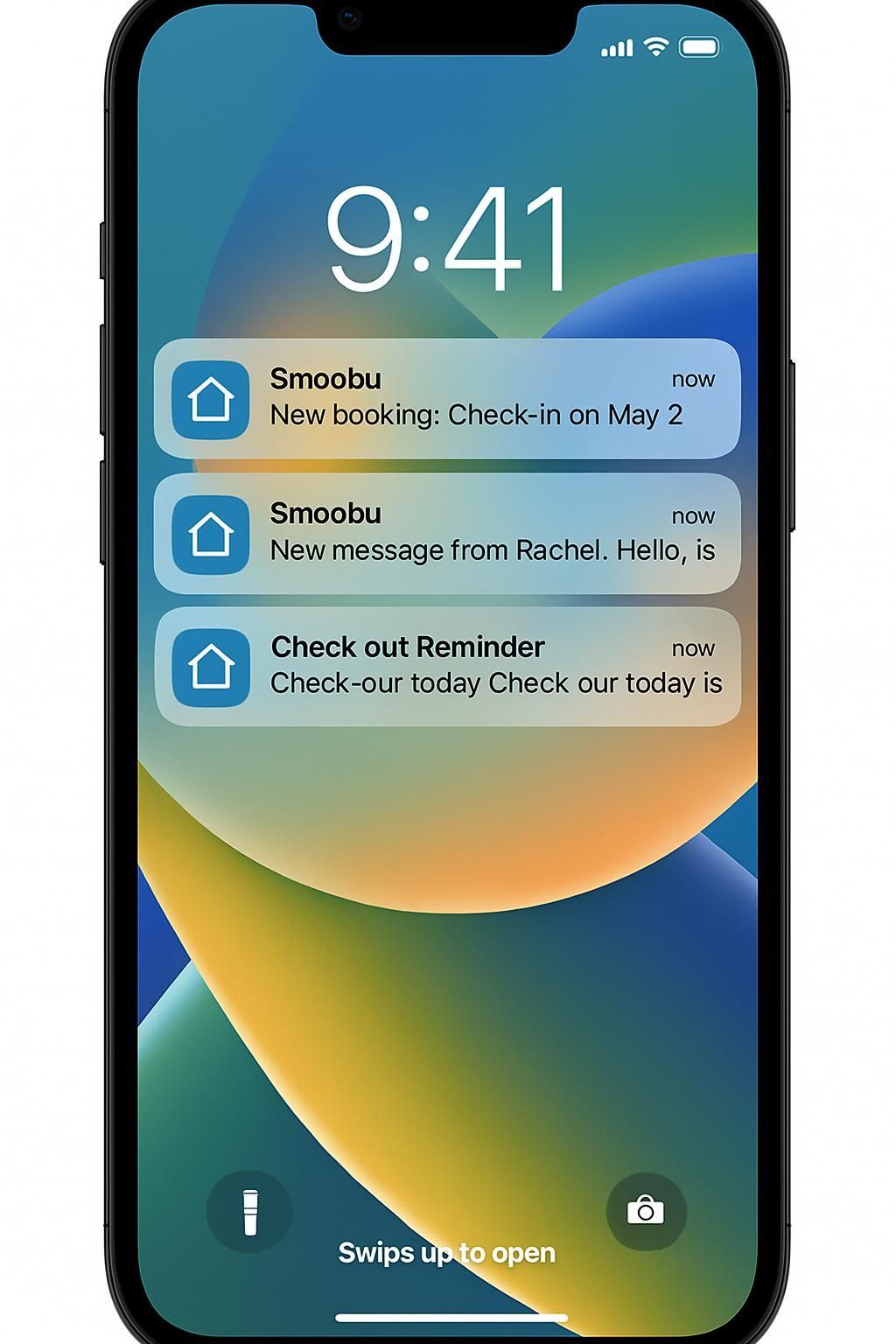
Smoobu’s mobile apps are fully realized extensions of the web platform, available on both iOS and Android. Remote check-ins, messaging, booking confirmations, and calendar adjustments can all be executed on the go. Push notifications update hosts instantly when a new booking lands or when a guest sends a question. For Sarah, an owner managing from abroad, this was transformative; she resolved guest concerns within minutes while on vacation herself, thanks to Smoobu’s real-time alerts. Field feedback consistently marks Smoobu’s mobile app as a driver for increased efficiency and peace of mind.
Cloudbeds’ Fragmented Mobile App and Performance Concerns
Cloudbeds segments its mobile experience: one app for reservations, another for messaging, yet another for inventory audits. While each module performs reliably enough on its own, the experience lacks cohesion for users who need to act quickly across multiple property functions. Users have reported performance slowdowns and occasional crashes, particularly during high season. For a guest needing a key code resend or an urgent change to house rules, this fragmentation can result in communication delays, sometimes leading to preventable negative reviews or guest frustration.
Customer Support Evaluation: Smoobu Multi-Channel vs Cloudbeds Ticket System
Personalized and Responsive Support Offered by Smoobu
Unique to Smoobu is a diverse, multilingual support team, available via live chat, email, and even video appointments. Whenever Fiona had a technical question or hesitated over a new integration, she was connected with product specialists—not just generic helpdesk agents. Smoobu prides itself on resolving over 80% of issues during first contact. Hosts describe the support experience as “reassuring” and “human,” which is crucial when unexpected technical glitches occur in the middle of a busy booking season.
Cloudbeds Ticket-Based Support: Response Times and Communication Limitations
By contrast, Cloudbeds utilizes a traditional ticketing system. While it is effective for logging and tracking issues, hosts have found that the wait times for initial responses—and for resolution—are often longer than desired. Escalations may need multiple follow-ups, and many users report feeling “out of the loop” during complicated technical problems. In a segment where hospitality is everything, a lack of immediate or empathetic support can become a deal breaker.
Trial and Demo Access Comparison: Hands-On Evaluation with Smoobu and Cloudbeds
Smoobu’s Risk-Free 14-Day Full Access Free Trial
Smoobu stands out by providing a 14-day free trial that unlocks every feature, including website editing, channel syncing, and guest communication tools—without requiring a credit card. For many operators considering a switch, this hands-on access creates zero-pressure experimentation. It empowers them to recreate real-world rental scenarios before committing financially, de-risking the onboarding process for newcomers.
Cloudbeds Demo Access Requiring Upfront Payment Details
Cloudbeds makes a different choice: prospective users must submit payment details in advance, even for trial access, and may be routed through sales calls before unlocking full product features. While this approach supports a high-touch enterprise onboarding model, it suppresses spontaneous exploration—particularly among independent hosts wary of up-front commitment. Feedback in 2025 has been consistently clear: free, unrestricted trials drive greater platform trust and adoption.
Cloudbeds vs Smoobu: Feature Comparison (2026)
Ultra Interactive Comparison Table| Feature | Cloudbeds | Smoobu |
|---|
Pricing Transparency and User Suitability: Who Benefits Most from Cloudbeds vs Smoobu
Smoobu’s Straightforward All-Inclusive Plans: Ideal for Small Hosts
Smoobu excels with an all-in-one pricing approach: every essential feature, from channel management to website building, is bundled in a single, easily understood monthly rate. No surprise add-ons, overage charges, or hidden integration fees—operators can scale with confidence knowing exactly what to budget. For hosts with one or a dozen units, this clarity is a proven stress reducer, supporting growth without administrative uncertainty.
Cloudbeds’ Tiered Pricing and Add-Ons for Larger Hospitality Portfolios
Cloudbeds takes a classic hotel software route, segmenting its service into tiers and modules. Advanced channel management, guest automation, or detailed analytics may incur extra monthly charges. This model works for larger hotel chains with specific needs, but can catch smaller operators off guard—leading to unexpected bills and financial strain. The flexibility offered is real, but so is the complexity in cost forecasting.
Target User Base Insights: Independent Hosts vs Larger Hotel Chains
Key differences between Smoobu and Cloudbeds emerge most clearly when examining their user bases:
Platform | Best for | Key Advantage | User Feedback |
|---|---|---|---|
Smoobu | Independent hosts, small hotels, vacation rentals | All-in-one simplicity & direct booking boost | “Everything was set up and working by lunch!” |
Cloudbeds | Large hotels, property managers (20+ units), enterprises | Robust hotel workflows, advanced analytics | “Powerful but overwhelming for our two rentals.” |
If you’re a solo host or manage a handful of properties, Smoobu offers immediate agility with fewer barriers and more predictable expenses.
For regionally branded hotels or multi-property managers aiming at multi-country expansion, Cloudbeds may justify its complexity thanks to deep configuration options.
Positioning Smoobu as Top Cloudbeds Alternative for 2026
By addressing the real-world needs of independent operators and focusing on integrated, transparent solutions, Smoobu positions itself as the leading alternative to Cloudbeds in 2026. Operators who prioritize direct bookings, real-time integrations, and affordable, commission-free growth continually favor Smoobu over more fragmented or opaque competitors. If you want to maintain guest relationships, automate routine tasks, and uphold a strong brand identity without vendor lock-in, the platform’s strengths are clear. Smoobu’s edge for small and medium-size hosts—combined with an ever-expanding feature set—cements its reputation in the vacation rental management landscape.
Does Smoobu support instant synchronization with Airbnb and other OTAs?
Yes, Smoobu synchronizes calendars, rates, and availability in real time with Airbnb, Booking.com, and over 100 OTAs, preventing double bookings and maximizing occupancy.
Can I create a multilingual website without coding on Smoobu?
Absolutely. Smoobu’s website builder supports multiple languages and allows hosts to customize content, colors, and booking forms without any design or programming experience.
Is there a free trial available for Cloudbeds?
Cloudbeds usually requires payment information to access its demo or trial environment. Smoobu, by contrast, offers a fully-featured 14-day free trial without credit card requirements.
Which system is more suitable for a small rental business?
For independent hosts or managers of a handful of units, Smoobu’s simple setup, transparent pricing, and direct booking tools make it the preferred choice. Cloudbeds appeals more to larger hotels and professionally managed portfolios.