

Hospitable review: comprehensive user experience and feedback
In Brief
Hospitable stands out for automating core tasks for Airbnb, VRBO, and short-term rental management—especially guest messaging and calendar syncing.
User reviews from late 2025 to early 2026 show praise for efficiency, but also highlight challenges with customer service, calendar sync, and AI misfires.
Features like Heartbeats, Market Ranking, and Stealth Mode offer unique tools not found in most competitors such as Guesty or Lodgify.
Pricing remains affordable for small portfolios, but costs can scale quickly for larger operators with more properties or advanced needs.
Ideal for hosts seeking fully integrated automation, but property managers with large, multi-channel portfolios may find limitations compared to platforms like Guesty.
In an era where short-term rentals shape the travel experience, Hospitable has become a powerful ally for hosts and property managers looking to streamline every stage of their rental operations. As competition intensifies on Airbnb, VRBO, and other platforms, the need for intelligent software that can automate messaging, centralize bookings, and ensure smooth coordination grows sharper. Recent reviews from late 2025 and early 2026 reveal a nuanced landscape: hosts sing praises for cutting hours of manual work, while others voice frustration over AI-driven errors and the complexities of managing hundreds of listings. Examining the journey of Hospitable, from its automation-driven mission to quirky tools like Stealth Mode and Heartbeats, unveils a platform in flux—with evolving strengths and growing pains that echo across the vacation rental industry. Through the lens of real hosts—like fictional owner Alice, juggling five Paris apartments, or Samir, overseeing 80 beachside condos—this review explores whether Hospitable hits the sweet spot between ease, innovation, and control in 2026’s fast-paced hospitality market.
What is Hospitable? Understanding Its Mission and Market Presence
Hospitable is a modern software platform engineered to simplify property management for the ever-changing short-term rental sector. Tailored recognition within the Airbnb and VRBO ecosystems situates the application at the intersection of convenience, automation, and guest experience. Distilling the chaos of rental operations into streamlined tasks, Hospitable aspires to become a one-stop solution for solo hosts and professional property managers alike.
Hospitable’s Origin Story and Evolution in Short-Term Rental Management
Launched to address the burgeoning complexities of short-term rentals, Hospitable (previously known as Smartbnb) emerged as a reaction to hosts’ growing need for technological edge. In the early days, founders noticed that the surge of bookings on Airbnb and other channels often overwhelmed property owners, who juggled communication, cleaning schedules, and double bookings. Over time, the software matured, integrating feedback, new functionalities, and robust support for an expanding network of global users.
Core Mission: Automating Guest Messaging, Calendar Syncing, and Team Coordination
The heart of Hospitable beats with automation—eliminating repetitive tasks like guest communication and calendar management. By automating pre-arrival instructions, check-in coordination, and post-stay review requests, Hospitable allows hosts to reclaim valuable time. The software also brings together team task assignments, cleaning workflows, and maintenance tracking, fostering seamless collaboration. From managing a lone cabin in the Rockies to orchestrating urban apartment blocks, users emphasize how Hospitable accelerates operations while minimizing oversight.
Compatibility with Major Platforms: Airbnb, HomeAway, and VRBO
Strategically positioned, Hospitable offers deep compatibility with heavyweights like Airbnb, VRBO, and HomeAway, unlocking essential cross-platform management. Hosts can centralize their calendar, messaging, and reservations, avoiding tedious toggling between disparate interfaces. This robust connection with widely used booking sites equates to wider audience reach and more bookings, a crucial advantage for modern hosts competing in saturated markets.
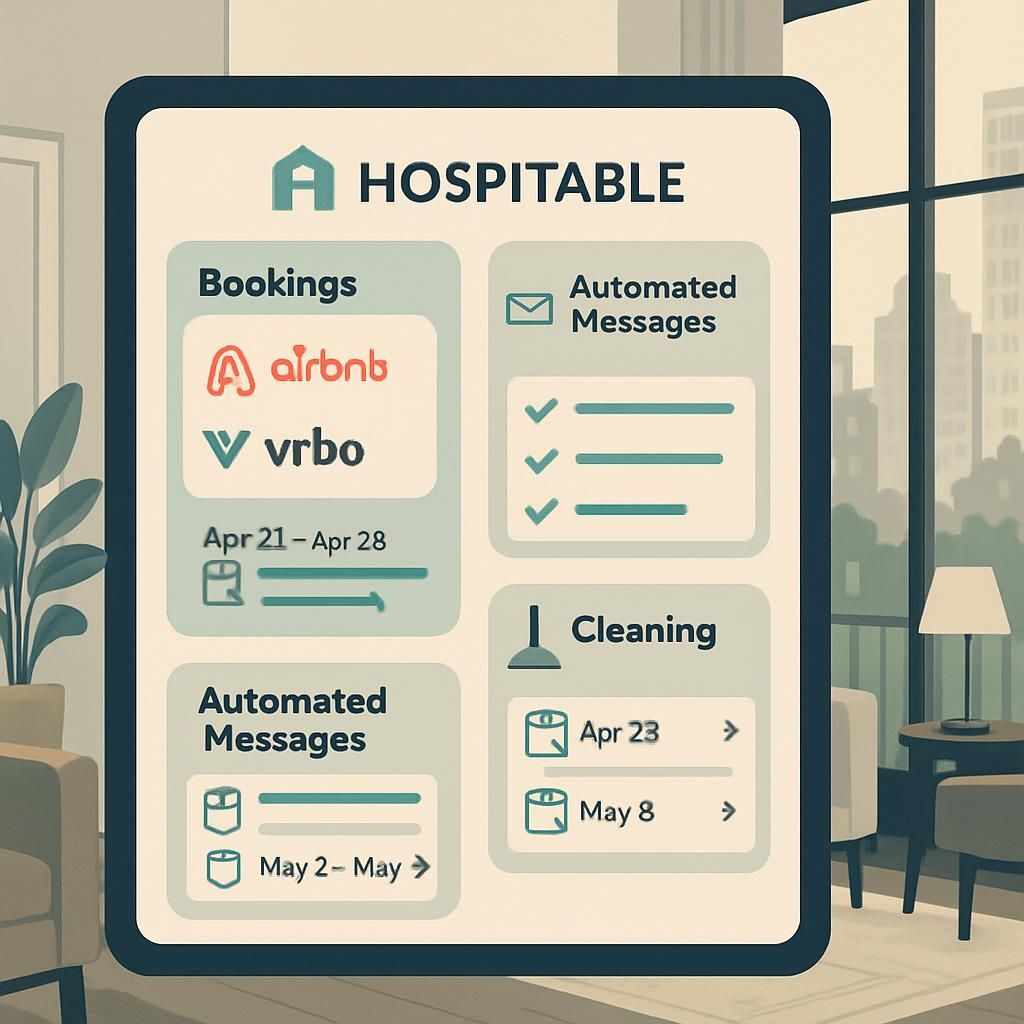
Key Features of Hospitable that Set It Apart from Competitors
Hospitable brings to the table a suite of features that differentiate it from traditional software solutions and even newer contenders in the property management field. Its modular approach, integrating automation with practical tools, caters to the evolving needs of 2026’s hosts.
Automated Messaging Flows: Inquiry to Review Management Made Easy
Perhaps the most celebrated aspect is the automated messaging flow. From the instant a guest inquires via Airbnb to the completion of their stay and post-checkout review, Hospitable orchestrates every message with precision. It personalizes pre-arrival greetings, troubleshooting FAQs, and even nudges guests for reviews after departure. Hosts particularly endorse the unified inbox, which captures communications from Airbnb, VRBO, and direct bookings, ensuring no guest is left unanswered—even when managing a dozen active conversations on a bustling weekend.
Advanced Calendar Synchronization Across Multiple Channels
The platform’s multi-channel calendar synchronization proves vital for hosts listing rentals across Airbnb, VRBO, and smaller portals. With the Heartbeats tool, instant updates reduce double bookings, while owners like Samir, managing 80 beachfront condos, report fewer scheduling mishaps. The real-time calendar sync empowers hosts to respond rapidly to late bookings and cancellations—a competitive edge noted in user feedback. Still, common pain points include inflexibility in manual calendar entries and rare but impactful sync failures.
Cleaning, Task Management Automation, and Unified Inbox Benefits
Comprehensive cleaning automation is a highlight: Hospitable delivers task notifications to team members as soon as a reservation is confirmed via Airbnb or other channels. The team management interface lets hosts assign, monitor, and report on maintenance or cleaning jobs without endless group messages. This clarity is invaluable for property owners managing multiple apartments in busy cities.
Coupled with the unified inbox, managing guest expectations and special requests—such as last-minute stroller drop-offs or lost key emergencies—becomes seamless. These features are consistently cited as boosting overall guest satisfaction and personal ratings.
Unique Tools: Heartbeats, Market Ranking, Stealth Mode, and Checkpoint
Distinctive to Hospitable is the Heartbeats feature, ensuring the calendar remains consistent across platforms. Market Ranking delivers actionable insights, showing how a listing performs relative to others in the local Airbnb or VRBO market. Hosts like Alice use Stealth Mode, hiding listings during unbookable hours or maintenance periods, a strategic advantage during peak tourist influxes.
Checkpoint, the built-in verification tool, introduces a layer of security by automatically requesting and processing guest ID submissions—especially relevant for direct bookings. This protects property portfolios from fraud and helps comply with evolving local regulations.
Hospitable Feature | Use Case | User Feedback (2026) |
|---|---|---|
Heartbeats Calendar Sync | Instant multi-channel updates when bookings or cancellations occur. | Minimized double bookings, occasional manual override frustrations. |
Unified Inbox | Centralized messages from Airbnb, VRBO, and direct channels. | Improved communication speed, minor lag during peak usage. |
Checkpoint Verification | ID checks for guest screening and compliance in direct bookings. | Enhanced security, very rare identity processing errors. |
Stealth Mode | Temporarily hides listings for maintenance without full deactivation. | Prevents accidental bookings, sometimes delays in relisting. |
Hospitable Pricing Review: Subscription Plans and Additional Costs
Transparent pricing is a key marker for Hospitable, though actual costs can vary based on portfolio scale and selected features. Solo hosts often find initial costs palatable, whereas those handling a broad suite of rentals face nuanced pricing tiers and incremental add-ons.
Tiered Plans: Host, Professional, and Mogul Pricing Comparison
Hospitable currently structures its plans into “Host,” “Professional,” and “Mogul” tiers. The Host tier targets users with up to two properties, including core features like automated messaging, calendar sync, and unified inbox access. Professional scales to mid-size managers, unlocking advanced reporting and team management tools. The Mogul tier, geared toward companies overseeing extensive portfolios, adds premium support and enhanced analytics.
Scaling Pricing Models for Small to Large Property Portfolios
The pricing model is based on the number of active listings, which means a single operator with 60 Airbnb apartments can quickly see costs escalate. While smaller hosts like Alice claim robust value for money with integrated calendar and messaging, large-scale managers highlight the compounding of costs when scaling. Opportunities for volume discounts or enterprise-level solutions are emerging, but not yet universally available.
Add-Ons, Extra Users, and Direct Booking Feature Expenses
To unlock advanced functionalities—like guest verification on direct bookings, extra user seats for growing teams, or direct channel integrations—additional monthly fees apply. This modularity encourages lean operation at the outset, but some hosts express concern over the final bill once all desired features are activated. Investment must be weighed against expected revenue and efficiency gains.
User Onboarding Experience and Customer Support Review for Hospitable
The journey with Hospitable starts at onboarding—a process that, according to recent reports, is brisk for some and a cerebral maze for others. User experience varies, largely dependent on technical comfort and portfolio complexity.
Self-Service Onboarding and Optional Paid Guidance
Most property owners enter via self-guided onboarding flows, involving detailed calendar imports, message template customizations, and third-party account linking. For users like Alice, the step-by-step interface simplifies migration from Airbnb to unified management. Those preferring one-on-one guidance may opt for paid onboarding sessions, which include direct consultation and expanded training—crucial for managers onboarding dozens of listings at once.
Balancing AI-Driven Customer Service and Human Support Availability
Feedback reveals satisfaction with the platform’s AI-powered helpdesk for routine tasks—resetting calendar connections, troubleshooting message triggers, and updating guest workflows. However, some users describe frustration over delayed response times during urgent incidents. While ticketed support is available, direct phone support remains limited, with users noting bottlenecks during major Airbnb system outages or large-scale syncing issues. This dynamic between customer service innovation and direct human intervention remains an active area for improvement according to large-scale managers.
Integration Capabilities of Hospitable: Supported Tools and Limitations
For operators intent on building robust, tech-forward rental businesses, Hospitable’s integration capacity with external software determines overall value. Though robust in some categories, there are recognized boundaries that impact versatility.
Third-Party Integrations in Accounting, Amenities, and Booking Channels
Existing integrations span leading accounting software, amenities management tools, and booking channels like Airbnb and VRBO. This enables users to sync payment records, automate consumables restocking, and manage cross-platform reservations without duplicate data entry. Small business owners appreciate the out-of-the-box connections to software like QuickBooks.
Dynamic Pricing, Guest Verification, and Home Automation Compatibility
Dynamic pricing tools allow listings to respond to market demand, leveraging real-time data for maximum revenue. Integration with home automation software—smart locks, environmental controls—creates a seamless guest experience, particularly for high-touch luxury rentals. The Checkpoint guest verification tool reduces fraud, especially for direct bookings outside of Airbnb or VRBO, instilling confidence for risk-averse property owners.
Comparing Hospitable’s Integration Breadth to Competitors
While praised for core platform compatibility, Hospitable still lags behind giants like Guesty in total partner integrations—particularly in niche local channels or highly bespoke amenity services. Some managers with exotic properties or specialized software needs gravitate toward platforms with broader connectors. The platform’s limited flexibility for one-off custom integrations is a recurring reason for migration among large-scale users seeking bespoke workflow automation.
Hospitable vs Competitors: 2026 Comparison
| Feature | Hospitable | Guesty | Lodgify | Hostaway |
|---|
Real User Feedback: Insights from Hosts and Property Managers (Late 2025 – Early 2026)
Late-stage user reviews offer a candid glimpse into both the celebrated victories and frustrating obstacles landlords encounter using Hospitable daily. Distinctions arise between solo operators and larger agencies, painting a composite portrait of the platform’s strengths and ongoing developmental needs.
Usability and Feature Set Appreciation Among Diverse User Types
Independent hosts consistently commend the clarity of the dashboard, from multi-calendar overviews to color-coded task flows. The accessibility of features, especially for first-time rental hosts on platforms like Airbnb, scores high among tech newcomers. Yet, as Samir notes in his workflow managing 80 units, there are trade-offs—advanced reporting helps, but menu navigation can lag during high-volume event weekends.
Efficiency in Task Automation and Impact on Guest Communication
Efficiency spikes are widely reported. Automated reminders, seamless calendar blending, and scheduled cleanings shave hours off weekly admin. Review rates rise thanks to targeted post-stay requests, boosting listing visibility on Airbnb and VRBO. Property managers cite substantial savings in manual labor, attributing higher booking rates in part to lightning-fast responses generated by pre-loaded templates.
Common Challenges: Calendar Sync Issues and Automated Messaging Errors
Despite overwhelmingly positive sentiments, recurring complaints cluster around multi-channel calendar management. Occasional lags mean manual blocks sometimes go unnoticed, leading to accidental double bookings or misaligned check-out schedules. Automated messaging, while praised for consistency, can send mismatched responses if not frequently reviewed, as illustrated by Alice’s Christmas Eve guest receiving a check-in reminder a week after checkout—a minor mishap that risks guest satisfaction.
Customer Service Delays and AI Mistakes Affecting Finances
Majority of interactions are routine and painless, but users emphasize that in moments of crisis—such as false overbooking from sync errors or invoice miscalculations—prompt human customer service is crucial. Some recount losses incurred when AI-generated pricing sent last-minute deals too low or failed to update after manual overrides. This dynamic underscores the tension between automation’s promise and the need for active user oversight, especially for those managing large portfolios moving rapidly between Airbnb, VRBO, and direct bookings.
Comparative Analysis: Hospitable vs Guesty, Lodgify, and Hostaway
The competitive landscape for property management software is fierce, with platforms like Guesty, Lodgify, and Hostaway pursuing similar markets but with distinctive approaches and cost structures.
Feature Overlaps and Differentiators in Pricing and Target Audience
All major players cover core ground: calendar merge, automated communication, channel management, and reporting. Hospitable stands out for its lean interface and rapid onboarding, winning over smaller and growth-stage hosts. In contrast, Guesty follows an enterprise-first model, pricing per listing but layering higher-touch customer service and more niche integrations for luxury and commercial property managers.
Unique Offerings Like Financing and Integration Advantages
Some competitors now bundle property financing, insurance services, or advanced analytics into subscription packages. Lodgify, for instance, plays up its built-in website generator for branding, whereas Hospitable excels in unified inbox and post-stay review optimization. Hostaway scores points for its integration library, offering wider connections to local services, payment gateways, and guest review aggregators. When it comes to direct bookings, Hospitable and Lodgify are neck and neck, each providing scalable solutions but diverging on pricing flexibility and guest verification tools.
Where Hospitable Excels and Falls Short Versus Competitors
Hospitable’s strength lies in mid-market, automation-focused hosts craving a balance between price and performance. Its comparative weakness is manifest for those needing custom API integrations or managing multi-country regulatory compliance—a reason some shift to Guesty for large-scale operations. The platform’s development roadmap reflects ongoing attempts to bridge these gaps, with recent user forums highlighting calls for a broader range of partner integrations and a more responsive escalation channel for customer complaints.
The Role of Automation in Hospitable’s Platform and Its Impact on Hosts
Automation is both a boon and a challenge in Hospitable. The automated handling of messages, team coordination, and calendar blocking lightens the workload dramatically for solo hosts and small agencies.
Maximizing Efficiency with Automated Guest Messaging and Cleaning Tasks
Automated communications ensure guests receive timely instructions and immediate post-booking responses—critical for Airbnb superhosts chasing elusive five-star reviews. Cleaning teams benefit as check-out triggers send instant notifications to start turnovers. Real-world examples abound: Alice’s team responds to high-season bookings within minutes, rarely missing a beat.
Faster check-in for guests, reducing late-night support calls.
Pre-scheduled maintenance minimizes last-minute crises during high-occupancy weekends.
Potential Pitfalls of Overautomation: User Control and Error Management
The flip side is overautomation—leaving critical interactions at the mercy of AI and risking impersonal or inappropriate responses. Without regular manual review of messaging templates and calendar overrides, hosts risk guest confusion or even legal missteps. Several property managers recount near-misses where unvetted updates led to lost income or compliance issues, particularly with increasingly complex short-term rental laws in major cities.
Pricing Affordability and Scalability: Is Hospitable Right for Your Portfolio Size?
Not every operation fits neatly into the Hospitable pricing model. The scale at which cost becomes prohibitive depends on strategic needs and existing technological infrastructure.
Cost-Benefit Review for Small Hosts vs Large-Scale Property Managers
Solo hosts or boutique agencies cite outsized benefits to cost—every dollar spent on Hospitable recouped in added bookings on Airbnb or VRBO and reduced manual labor. Cost visibility and predictability rank highly, with transparent subscription rates and few hidden fees on essential features.
Implications of Pricing and Feature Accessibility on Portfolio Growth
As portfolios grow, however, the expense tied to each additional listing can snowball, particularly if extensive team seats, unique integrations, or advanced analytics are required. This can create inflection points where migrating to a competitor or investing in customized in-house solutions—often via Guesty—becomes financially attractive.
Customer Support Quality and Responsiveness: Balancing AI and Human Interaction
Hospitable’s customer support model has evolved to leverage smart AI while maintaining human intervention for complex issues. For day-to-day troubleshooting, most users praise speed and relevance—but stress peaks during outages or when revenue is threatened.
Feedback on Responsiveness and Support Channels Availability
Routine queries—connection resets, minor billing questions, or template edits—are handled efficiently via chatbots and support tickets. However, Alice and Samir both recall waiting hours (occasionally days) during the rare support backlog, especially during Airbnb peak seasons or global platform disruptions. Calls for expanded live-chat hours and direct phone service are frequent, especially among premium plan subscribers, who often handle high-value bookings.
Impact of Support Experience on User Satisfaction and Platform Adoption
The ultimate impact of customer service quality cannot be underestimated: satisfied users cite it as a key reason to recommend Hospitable to peers, while those burned by slow resolution and miscommunications reconsider long-term adoption. Rapid evolution in the software scene means customer expectations rise each year, and 2026 is no exception.
Support Channel | Availability | User Impression |
|---|---|---|
AI Chatbot | 24/7 for basic issues | Fast, but limited for complex cases |
Support Ticket | Business hours, extended on weekends | Efficient, backlog possible during surges |
Live Chat | Premium tier only | Highly rated, but desired by more users |
Phone Support | Not standard, by appointment | Demanded by large portfolio managers |
Final Assessment: Who Should Choose Hospitable Based on User Reviews and Features
Pulling together operational value, pricing flexibility, and real-world feedback, Hospitable emerges as an optimal solution for specific host profiles and growth trajectories.
Strengths for Smaller Portfolios and Comprehensive Automation Seekers
For individual hosts or boutique agencies, the blend of affordable pricing, robust features, and intuitive software yields disproportionately high efficiencies. Automation of guest communications, multi-channel calendar harmony, direct bookings, and security via guest verification make it a one-stop shop for busy hosts seeking to outpace market competition. The positive ripple effect on guest satisfaction and booking rates is a common refrain among reviewers.
Cautionary Notes for Larger Property Managers Regarding Cost and Integrations
Larger operators—especially those spanning multiple markets or complex regulatory environments—should carefully calculate the cumulative cost of scaling and the value of every desired integration. While Hospitable is rapidly evolving, those needing enterprise-level flexibility, extensive custom integrations, or top-tier customer service may find strong contenders in Guesty or Hostaway. As the landscape evolves, continuous attention to innovation, user feedback, and transparent customer service remains critical for platform loyalty and long-term growth.
What platforms does Hospitable support for channel and calendar integration?
Hospitable is fully compatible with major platforms like Airbnb, HomeAway, and VRBO, offering robust synchronization of calendars, messaging, and reservations across these channels.
How does Hospitable handle guest verification and security?
Hospitable’s Checkpoint feature automates guest ID verification, especially for direct bookings, protecting hosts from fraud and ensuring regulatory compliance.
What are the common user complaints about Hospitable?
The most frequent issues include occasional calendar sync errors, unintended automated messaging, slow customer service response during peak times, and the cumulative costs for larger portfolios.
How does Hospitable’s pricing work as my number of properties grows?
Hospitable operates on a per-listing pricing model with tiered subscriptions; costs can scale rapidly for large portfolios, especially if advanced features or extra user seats are required.
Who is Hospitable best suited for compared to alternatives like Guesty or Lodgify?
Hospitable is ideal for small to mid-sized hosts seeking automation and affordability without sacrificing essential features. Large-scale property managers or those needing extensive integrations might favor platforms like Guesty.