

In a marketplace defined by relentless change and increasingly digital competition, mastering the art and science of dynamic pricing has become a critical edge for brands across all sectors. Gone are the days of locking in fixed prices for months; today’s leaders, from e-commerce giants to SaaS innovators, thrive on data-driven, minute-to-minute adjustments. The most sophisticated pricing software solutions—fueled by real-time data, rapid price optimization, and seamless integration—now form the backbone of revenue management in retail, travel, manufacturing, and more. But the real race lies in leveraging the right tools: platforms that blend AI, actionable analytics, and operational agility, empowering both sprawling global enterprises and agile digital boutiques to respond instantly to shifting demand, fierce competition, and evolving customer expectations. In this landscape, static pricing is risk, but strategic pricing automation is reward—delivering not just incremental margin, but transformational market leadership.
At a Glance:
Dynamic pricing is pivotal for fast-moving markets and sectors facing volatile demand and competition.
Leading dynamic pricing tools leverage AI, real-time market data, and automation for maximum agility.
Integration with ERP, CRM, and e-commerce platforms like NetSuite, Salesforce, and Magento is key for scalable implementation.
Relevant platforms include PROS, Zilliant, Vendavo, Prisync, and Intelligence Node—each with unique strengths, from large enterprise analytics to SME-friendly repricing.
Benefits range from increased revenue, improved efficiency, smarter pricing strategies, to better customer experiences.
Selection hinges on scalability, flexibility, technical fit, and return on investment—not brand alone.
| Tool | Best For | Key Features | AI Integration | Enterprise Integrations | Scalability | Verdict |
|---|
Why the Best Dynamic Pricing Tools Are Essential for Modern Businesses
The relentless pace of digital transformation means businesses no longer compete just on product, but also on the agility of their pricing. Dynamic pricing is emerging as the front line of commercial strategy, a reality understood by leaders ranging from traditional retailers to SaaS upstarts. Take the example of “Avid Shoes Inc.,” a fictional retailer whose early adoption of pricing software before the 2023 holiday surge allowed them to outperform by instantly responding to market demand spikes, inventory pressure, and competitor flash sales. This is no longer a nice-to-have: with the rise of global e-commerce and platforms like Amazon, a rigid pricing model means lost margins and market share.
Modern enterprises now arm themselves with pricing tools capable of integrating with vital ERP and CRM systems—think NetSuite, SAP, or Salesforce—to deliver split-second adjustments and analytics-driven strategy. Gone is price setting as a periodic finance task; it is now a living, breathing engine of revenue management, essential for survival in volatile markets.
The Shift from Static to Dynamic Pricing in Competitive Markets
Globalization and digital platforms have dramatically shortened product and price cycles. What once required quarterly reviews now demands real-time response. For example, when Amazon introduced near-instant repricing in its marketplace, overnight it disrupted legacy models in traditional and digital retail spaces alike. Large brands and ambitious start-ups quickly realized that sticking to fixed prices risked falling behind on both margins and conversion rates.
With dynamic pricing, businesses no longer play catch-up—they lead. Platforms such as PROS and Competera allow companies to instantly detect shifts in competitor pricing, adjust in response to sudden surges in market demand, and optimize price points for unique customer segments. This relentless focus on market-driven adjustments is now synonymous with high performance in virtually every sector.
Industries Benefiting from Real-Time Pricing Adjustments
Real-world adoption of dynamic pricing extends far beyond retail. In hospitality, hotel chains like the fictional “UrbanStay” rely on solutions like Revionics and Vendavo to boost occupancy and revenue per available room by adjusting rates according to booking windows, events, and local demand surges. Airlines, famously, were pioneers of this approach—now employing tools such as PROS for continual fare optimization.
In the manufacturing sector, Vendavo arms B2B organizations with analytics to dynamically adjust contract pricing in response to input cost variability and fluctuating customer order patterns. Modern SaaS providers and e-commerce outfits, using platforms like Prisync or BlackCurve, capitalize on competitor repricing to maintain market share and margin in hotly contested spaces. Each of these sectors has embraced not just pricing automation, but an ethos of continuous price optimization as core to business growth.
Limitations of Traditional Fixed Pricing Models
Fixed pricing models, however robust they once seemed, have proven their limitations in today’s rapid-fire commercial landscape. The inability to immediately react to competitor moves or supply chain disruptions can translate into overpriced inventory, lost sales, and eroded profitability. For instance, rigid pricing left “Legacy Electronics” exposed during a chip shortage—while their rivals, equipped with dynamic pricing software, rapidly adjusted to both supplier cost increases and reduced availability, preserving both sales volume and margin.
In dynamic, technology-driven markets, the cost of inaction compounds over time—not just in dollars, but in customer trust. Static models increasingly appear not only inefficient but strategically negligent, especially as real-time pricing becomes the expectation for digital-first consumers.
Core Concepts Behind Dynamic Pricing Software
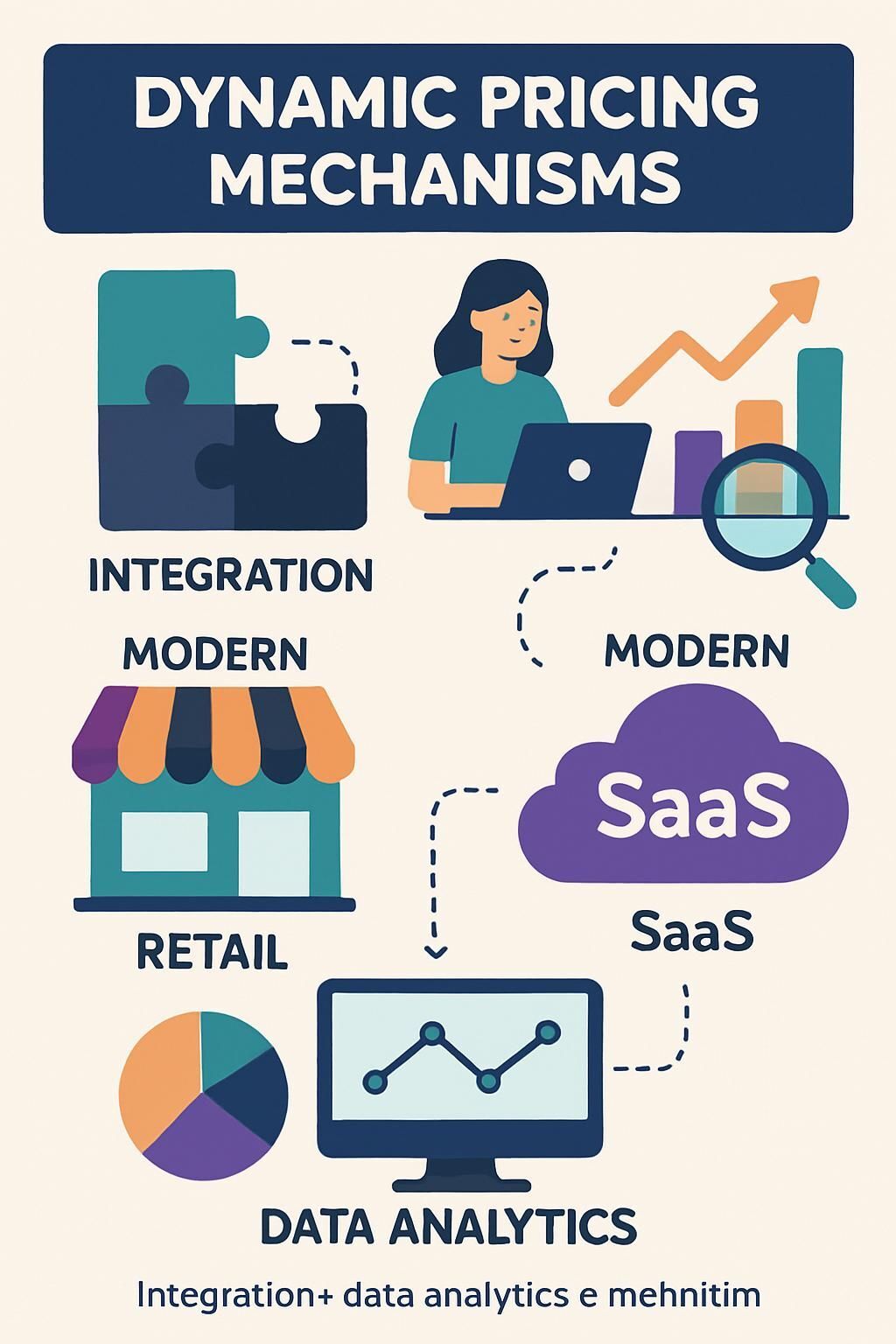
At the heart of the dynamic pricing revolution are intelligent systems that blend real-time data acquisition, rapid analysis, and decision logic. Modern pricing software tools capture enormous data streams: competitor prices, customer segments, inventory levels, and market signals.
These systems deploy a combination of rule-based processes and advanced artificial intelligence—often also leveraging machine learning and predictive analytics—to deliver ever-refined price recommendations. This continuous feedback is what allows businesses to switch from reactive to proactive pricing strategies, frequently recalibrating according to evolving patterns of competition, demand, or inventory dynamics.
How Dynamic Pricing Uses Real-Time Data and Market Signals
The defining hallmark of top dynamic pricing tools is their ability to process and act upon real-time data. Taking cues from industry bellwethers such as PROS and Intelligence Node, leading solutions continuously scan competitor price updates, conversion rates, stock movements, and external events—feeding this intelligence into their pricing engines. Integration with large ERP systems enables instant synchronization of stock and sales data, ensuring that no decision is made in isolation.
For example, during the 2024 Black Friday period, Prisync clients saw a measurable uplift in both sales and profit margin by automatically adjusting hundreds of SKUs in response to competitor markdowns, shifting customer activity, and real-time analytics from integrated e-commerce channels like Shopify.
Key Features of High-Performing Pricing Tools
Effective dynamic pricing software delivers several crucial capabilities for modern businesses:
Automated Repricing: Rapid, algorithmic changes in reaction to market triggers.
Competitor Monitoring: Continuous tracking and benchmarking of rivals’ prices.
Channel-Specific Optimization: Adjustments across sales platforms such as Amazon, Magento, and Shopify.
AI-Driven Insights: Machine learning applied to historical and present data for advanced prediction and decision-making.
Seamless Integration: Real-time sync with ERP and CRM solutions including SAP, Oracle, or Salesforce.
From granular price elasticity analysis to scenario simulations, these features form the kernel of high-velocity, high-precision price optimization engines, providing the actionable intelligence every ambitious enterprise needs.
SEO Criteria to Identify the Best Dynamic Pricing Tool for Your Business
In a crowded marketplace for dynamic pricing platforms, identifying the tool that best matches your commercial profile requires more than comparing feature lists. Success hinges on the alignment of system flexibility, pricing strategy support, integration potential, and a proven ROI track record. Only solutions that harmoniously blend configurability, scalability, and cost-efficiency will deliver sustainable margin growth and operational simplicity for growing businesses.
Evaluating Flexibility and Customizability in Pricing Strategies
The ability to support numerous pricing strategies—from basic rule sets to sophisticated AI-driven scenarios—is a major differentiator. Modern pricing software like Zilliant or Pricefx allows businesses to design, A/B test, and refine strategies without needing in-house data science teams. This flexibility also means fast adjustment: think of a retailer dropping a flash-sale pricing campaign in response to a sudden influencer-driven surge, or a manufacturer reacting to global raw material pricing shocks.
The best tools empower commercial and pricing teams to model scenarios, predict market reactions, and rapidly deploy both defensive and offensive pricing models, ensuring the organization moves with—not behind—market shifts.
Balancing Rule-Based Logic and AI-Driven Automation
Some companies, especially in regulated sectors, favor rules-based logic for transparency and governance, while others prioritize cutting-edge AI for its predictive accuracy and learning capacity. Tools like Vendavo and PROS deliver on both fronts, offering user-friendly interfaces to set ground rules but also advanced machine learning modules for continual improvement. The real breakthrough is platforms that blend these approaches, letting pricing managers retain control while unlocking the competitive advantage of full automation and optimization.
Integration Capabilities with ERP, CRM, and Other Enterprise Systems
True dynamic pricing excellence can’t exist in a vacuum. Leading solutions prioritize integration with core systems—ERP platforms such as SAP or NetSuite, sales and customer management engines such as Salesforce, and popular e-commerce backbones like Shopify and Magento.
Well-designed APIs, connectors, and configuration wizards ensure that data flows seamlessly in both directions—eliminating costly silos, manual rekeying, and delays. As firms expand to new channels and international markets, this interoperability underpins true scalability and enables consistent, real-time price management for every product and customer.
Scalability and Speed of Price Optimization
As business complexity grows, so does the importance of scalability. Systems like Vendavo and Competera shine in environments with vast catalogs, multiple pricing entities, and global reach. Conversely, nimble solutions like Prisync are trusted by fast-scaling digital-native brands who need rapid, no-fuss deployment.
Speed is also essential: state-of-the-art pricing tools can re-calculate millions of prices across regional branches in minutes during a market shock, a feat impossible with legacy spreadsheets or manual workflows. Whether launching into new channels or managing complex, multi-currency pricing, high velocity and horizontal scalability are now non-negotiable for sustained market success.
Feature | Legacy Fixed Pricing | Modern Dynamic Pricing |
|---|---|---|
Real-time Data Integration | No | Yes |
AI-Powered Analytics | Rare | Common |
Automated Competitor Tracking | No | Yes |
Scalability to New Markets | Manual | Instantaneous |
Top Dynamic Pricing Platforms Reviewed: Features and Market Fit
With dozens of dynamic pricing providers now vying for market leadership, the field has rapidly matured from “one tool fits all” to a sophisticated landscape of niche specialists and broad enterprise platforms.
AI-Powered Price Optimization Tools for Large Enterprises
Solutions like PROS, Vendavo, and Zilliant redefined what enterprise-grade price optimization looks like. Combining massive datasets, advanced AI, and seamless ERP and CRM integration, these platforms enable industry leaders to scale pricing across millions of SKUs, markets, and customer segments.
For global manufacturers, Vendavo delivers value-based price optimization linked directly to real-time cost changes and contract terms. PROS is recognized for its leadership in the travel/airline vertical, harnessing machine learning to fuel continuous fare and offer optimization. Multi-domain firms like Zilliant stand out for customizable rule sets and configurable scenario testing, making them suitable for businesses navigating complex, multi-entity operations.
Advantages and Potential Drawbacks of AI-Based Solutions
Leading AI-based dynamic pricing software offers the scale, speed, accuracy, and predictive power traditional models can’t touch. However, such sophistication brings steeper learning curves and more intricate data requirements. For instance, while PROS and Zilliant support high-frequency price updates and deep analytics, organizations must ensure robust data hygiene, system integration, and ongoing staff training.
Another consideration is overfitting: without careful governance, complex AI models may adapt to short-term data quirks, leading to unintended shifts in customer experience or brand positioning. Nevertheless, for high-stakes, high-complexity environments, these platforms consistently deliver transformative results in both margin and operational efficiency.
Industry-Specific Tools for Travel, Retail, and Manufacturing
The rise of industry-specific dynamic pricing tools responds to the unique requirements of sectors like travel, retail, and manufacturing. Platforms like Competera and Intelligence Node cater to retailers with advanced price scraping, omnichannel integration, and real-time market visibility tools—critical for fashion, electronics, and FMCG brands competing across global channels.
Travel and hospitality firms benefit from solutions such as Revionics, which optimize rates based on seasonality, occupancy, and event trends. For manufacturers, Vendavo provides bespoke modules that account for input cost volatility and contract complexity, giving sector leaders the levers to deploy nuanced, context-aware pricing strategies at scale.
Specialized Functionalities Tailored to Sector Needs
Sector-specific pricing tools differentiate through features like advanced bundle pricing, real-time promo optimization, and deep integration with industry-standard ERP/CRM platforms. For example, Prisync enables e-commerce managers to monitor thousands of competitor products and adjust prices simultaneously on Shopify and Magento. In B2B, Vendavo is notable for integration with SAP and NetSuite, supporting global quote-to-cash workflows and contract management.
Ultimately, the goal is not just matching competitors but anticipating them—leveraging unique market signals, supply chain feeds, and even weather or geopolitical events in verticals where marginal shifts spell major profit.
Dynamic Pricing Solutions Designed for Small to Mid-Sized E-Commerce
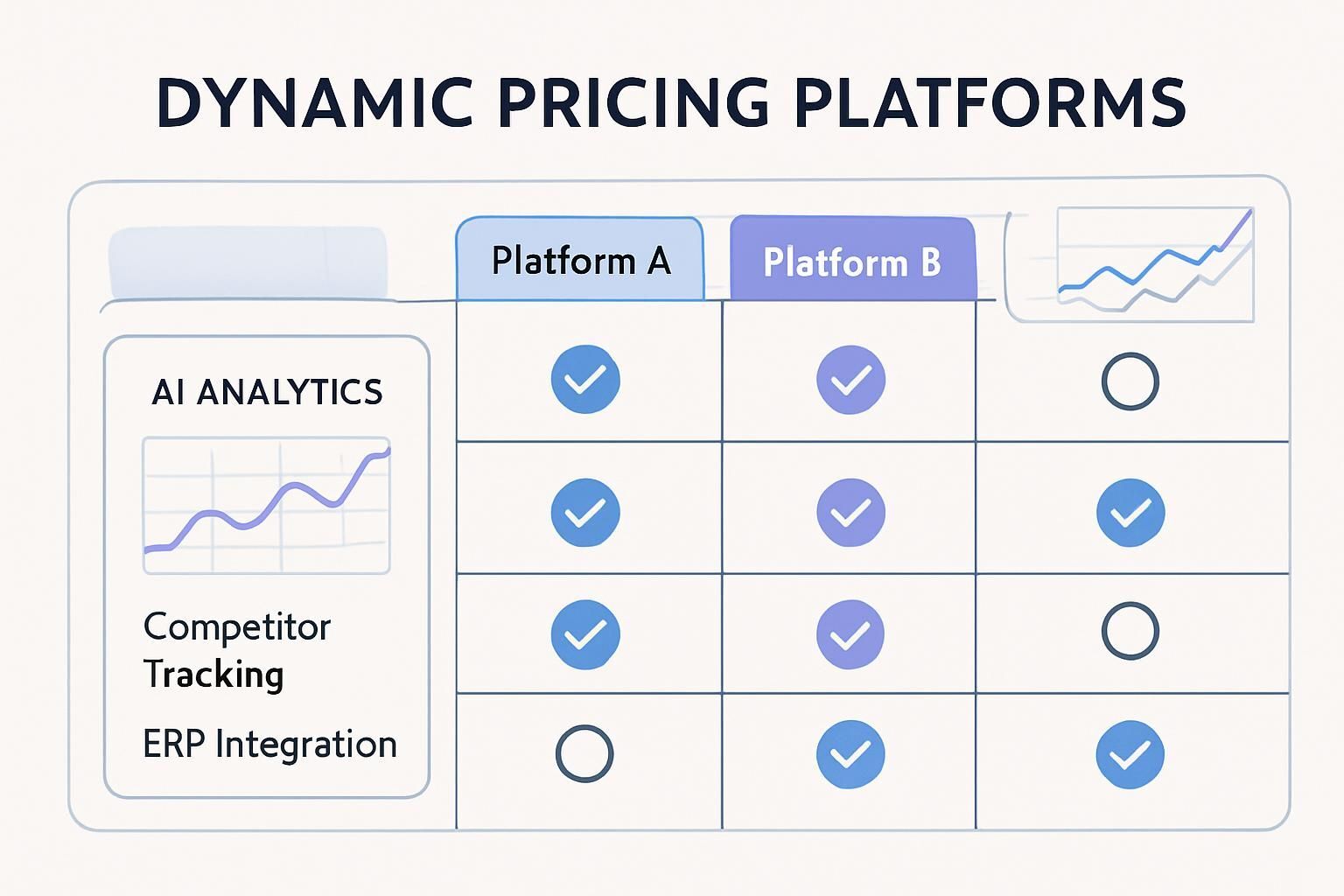
The democratization of sophisticated dynamic pricing has put enterprise-grade performance within reach of smaller, fast-growing businesses. Providers like Prisync, Intelligence Node, and BlackCurve target SMEs, enabling instant competitor tracking, automated repricing, and actionable analytics designed for digital-native brands looking to outmaneuver bigger players.
D2C companies and niche online sellers increasingly rely on these platforms to keep pricing current across Amazon, Shopify, and their own stores—winning the “buy box” on marketplaces and maximizing conversion during seasonal sales.
Competitor Tracking and Automated Repricing Features
Competitive intelligence is table stakes in modern price optimization. Prisync stands out for its efficient and user-friendly automated repricing, instantly updating prices in response to competitor movements across multiple channels. Intelligence Node delivers market-wide analytics via AI-powered dashboards, helping smaller brands punch above their weight in crowded segments.
This emphasis on automation and agility gives smaller teams the lever to match—and often outpace—bigger, more resource-heavy rivals in delivering compelling, market-matched prices every day.
Technical and Usability Considerations When Choosing a Dynamic Pricing Tool
Beyond features, the real-world impact of dynamic pricing software is defined by usability, integration ease, and the total lifecycle cost—from onboarding to daily operation.
Comparing Rule-Based Logic, Predictive Analytics, and Manual Controls
Modern pricing tools fall on a spectrum. Rule-based platforms provide rapid setup and clarity for organizations with clear, pre-set pricing policies—ideal for regulated industries or those with strict governance needs. Predictive analytics, meanwhile, unlocks new levels of accuracy and adaptability at the cost of higher data and training requirements.
Manual controls, still offered by hybrid solutions such as Vendavo and Zilliant, matter for organizations in transition. Managers can monitor, override, or phase in automation—balancing speed and oversight.
User Experience and Learning Curve for Pricing Software
Ease of adoption can make or break a dynamic pricing deployment. Tools with intuitive dashboards, guided strategy templates, and interactive visualizations—like Competera—accelerate user learning and engagement. By contrast, platforms requiring deep configuration or heavy IT resource commitment slow down ROI realization and can frustrate frontline teams.
The best solutions pair technical robustness with design simplicity, ensuring that both analysts and business users can make confident, data-driven decisions from day one.
Integrations and Compatibility with Complex Technology Stacks
In large, multi-system environments, seamless integration is paramount. Leading pricing software providers offer extensive libraries of connectors, APIs, and compatibility certifications with systems such as Oracle, Salesforce, and SAP. This ensures that price optimization decisions can ripple instantly through every part of the business—supply chain, finance, sales, and e-commerce—without costly, delay-prone middleware or manual updates.
Choosing a platform that natively supports your stack reduces friction, accelerates deployment, and prevents costly integration headaches down the line.
Pricing Models and Adoption Costs for Dynamic Pricing Systems
The commercial models for dynamic pricing software have evolved to suit business of all scales. Subscription pricing dominates, with tiers reflecting volume, feature depth, and integration complexity. Leading providers such as PROS, Vendavo, and Prisync offer modular packages—enabling businesses to right-size investment and scale up as complexity grows.
Critical considerations include total cost of ownership, expected time to value, and clear ROI projections based on actual margin improvements and cost savings from automation. Transparent, usage-based pricing also empowers high-growth companies to avoid overcommitting, while ensuring smaller operators can access advanced toolsets affordably.
Top 5 Best Dynamic Pricing Tools for 2026
Dynamic pricing is driven by a smart workflow that enables businesses to optimize prices in real-time based on accurate data and market insights.
-
Collect data from multiple sources: sales, inventory, competitors, customer behavior, and external market trends. Live Example: Fetching current price of a product on a major e-commerce API (see demo on right!)
-
Analyze market signals and competitors’ price changes to identify opportunities and threats. Instant benchmarks for optimal price adjustment.
-
Use AI or dynamic rules to determine the best price in real-time, maximizing margin or volume as per your goals.
-
Automatically update all your sales channels and internal systems with the new prices—seamlessly and securely.
-
Monitor outcomes and gather feedback to tune your strategies, ensuring continuous optimization and transparency.
Business Benefits of Implementing the Best Dynamic Pricing Software
Beyond margins, best-in-class dynamic pricing tools unlock a spectrum of strategic advantages:
Revenue Growth Through Market-Responsive Pricing Adjustments
The primary motivator for adopting dynamic pricing is unambiguous: revenue growth. Constant monitoring and intelligent price optimization unlock margin opportunities invisible to periodic review cycles. Basket size, conversion, and cross-sell all improve when prices match real-time customer value perception.
In studies, firms deploying AI-powered platforms like Pricefx and Vendavo report both revenue and market share lifts—attributable to the speed and granularity of price response enabled by these advanced pricing strategies.
Competitive Positioning and Market Share Improvement
Rapid reaction to market changes, competitor moves, and shifts in market demand is crucial for competitive positioning. Platforms such as Zilliant and PROS monitor hundreds of touchpoints, automatically pushing pricing decisions that protect and grow share without constant manual intervention.
Case example: a digital retail operator using Prisync was able to maintain “lowest price” status in key product categories for an entire promotional season, driving both click-through and conversion rates dramatically above unoptimized peers.
Operational Efficiency Gains From Automation and Data Analytics
Pricing automation means front-line staff—whether in sales, merchandising, or revenue management—spend less time in spreadsheets and more time on strategic tasks. Dynamic pricing software like Vendavo centralizes data, decision-making, and reporting, providing a system of record that eliminates double-work and manual re-keying.
Teams that once labored to update 1,000+ SKUs per week now operate at digital speed, freeing energy to pursue growth initiatives instead of plugging leaks left by outdated systems.
Enhancing Customer Satisfaction With Tailored Pricing Experiences
Modern customers expect individualized pricing—whether it’s a just-in-time travel deal, timely flash sale, or loyalty-driven offer. Dynamic pricing tools enable hyper-segmentation, allowing businesses to offer unique rewards and incentives to high-value or at-risk customers.
This results in higher engagement, stronger loyalty, and better perceived value—a clear differentiator as personalization becomes the norm in the consumer and B2B landscape alike.
Benefit | Example Dynamic Pricing Platform | Demonstrated Impact |
|---|---|---|
Revenue lift | Vendavo, Zilliant | Up to 8% increased margins |
Operational agility | Prisync, Competera | Significant reduction in manual workflows |
Customer loyalty | Intelligence Node | Higher repeat engagement post-promotion |
Choosing the Most Suitable Dynamic Pricing Platform for Your Needs
The path to optimal dynamic pricing results starts with rigorous self-assessment. The best platform is not defined solely by brand recognition or feature volume, but by the alignment with your specific commercial ambitions, operational setup, and future roadmap.
Assessing Current Pricing Models and Ownership of Pricing Logic
A thorough audit of existing pricing models and who governs them—centralized team, business lines, or hybrid—shapes the best-fit solution. Enterprises where pricing logic is closely held by regional managers may prioritize highly configurable, rules-driven platforms (like Vendavo). Larger organizations with centralized pricing may push for full AI-led price optimization (using PROS or Zilliant).
Matching internal workflows to system architecture ensures a smoother transition and guards against costly, underutilized features or security pitfalls.
Integration and Compatibility Factors to Consider
Every dynamic pricing software shortlist should be filtered by technical fit. Is your environment standardized on SAP or Oracle? Are your sales and service operations run through Salesforce? Do you run multiple e-commerce stores on Shopify or Magento? Ensuring compatibility avoids deployment headaches and speeds realization of price optimization benefits across the entire organization.
Complexity of Pricing Rules and Anticipated Deployment Scale
Firms with simple catalogs or straightforward pricing needs may thrive on plug-and-play tools like Prisync. In contrast, B2B, manufacturing, and multi-national players—with hundreds of unique price agreements and channel-specific rules—demand robust, highly scalable systems found in PROS or Vendavo suites.
Avoiding Pitfalls of Manual and Spreadsheet-Based Pricing Workflows
The transition away from manual or spreadsheet-based pricing delivers both immediate and long-term upside. Key challenges with manual processes include slow response cycles, error-prone updates, and opaque pricing logic. Modern pricing software automates the end-to-end process, delivering transparency, auditability, and a single source of truth.
Firms that delay the shift risk not just lost margin, but lost strategic control—especially as real-time market competitors weaponize speed and data for relentless advantage.
Future Trends and Strategic Importance of Dynamic Pricing Tools in Business
Looking forward, dynamic pricing will become less a tactical lever and more a central pillar of financial strategy. Market leadership will depend not just on access to the right data, but on the ability to synthesize, automate, and operationalize it rapidly and securely.
Dynamic Pricing Software as a Core Component of Financial Strategy
Once the domain of “back-office” functions, dynamic pricing now sits at the intersection of commercial leadership and digital strategy. As international supply chains grow ever more connected—and as customer expectations for fair, transparent, and personalized pricing intensify—the importance of robust, intelligent pricing tools cannot be overstated.
Gone are static, end-of-quarter price adjustments. Instead, CFOs and commercial directors leverage dynamic pricing systems as active levers in revenue management, risk mitigation, and strategic market entry.
Customization, API Access, and Data Security Challenges
With power comes complexity. Tailored implementation, API access for bespoke integrations, and bulletproof data security protocols are now mandatory features. Leading platforms, from Competera to PROS, prioritize robust data governance, audit trails, and customizable modules to support industry or customer-specific needs.
Regulatory scrutiny—especially regarding sensitive customer or strategic pricing data—means IT and compliance leaders are now deeply involved in the selection and operation of pricing software.
Comparative Insights from Leading Market Platforms
Comparative research shows that the most impactful solutions blend advanced analytics, real-time market intelligence, and broad integration. For example, one major airline cited a 9% year-over-year margin improvement after moving to an AI-driven platform blending PROS and Vendavo. In retail, Intelligence Node clients improved sell-through by anticipating competitor events, rather than simply matching prices.
Successful Use Cases Across Airlines, Retail, Hospitality, and B2B
Sector leaders from airlines to B2B manufacturers now openly share how dynamic pricing tools powered by PROS, Vendavo, Zilliant, and others deliver measurable, rapid ROI. In hospitality, hotels leveraging tools similar to Revionics fill rooms during slow periods and maximize ADR during peaks—all thanks to adaptive, data-driven pricing strategies.
User Support, Training Resources, and Accelerated Adoption Features
User-centric features now include extensive help centers, webinars, and in-app tutorials. Prisync and BlackCurve are recognized for fast onboarding and guided templates, reducing friction for teams new to dynamic pricing. Vendor-supported communities and active user forums have become crucial for peer benchmarking and ongoing optimization.
Methodical Approaches to Selecting Pricing Software for Optimal Results
In an age where dynamic pricing mastery differentiates industry leaders from laggards, selection cannot be left to chance. Rigorous requirements mapping—covering integration, scalability, data, compliance, and ROI—ensures the investment delivers not just incremental benefit but a step change in commercial agility and competitive power.
The future belongs to those who operationalize pricing strategies at the speed of data. The right tool isn’t just a system—it becomes the brains of your revenue engine.
What is dynamic pricing and why is it important?
Dynamic pricing refers to the use of automated systems and real-time market data to adjust prices for products or services instantly. It is crucial for businesses facing fluctuating demand, intense competition, or complex inventory management, as it maximizes revenue, profitability, and market share by aligning prices with current market conditions.
Which sectors benefit most from dynamic pricing software?
Sectors like e-commerce, hospitality, travel, retail, and manufacturing see the greatest benefits. Airlines use dynamic pricing for continual fare optimization, hotels for room pricing based on demand spikes, and online retailers for instant competitor repricing to win buy-box positions. B2B manufacturers use it to keep pace with changing input costs and global market volatility.
How does integration with ERP or CRM systems improve dynamic pricing?
Integration ensures seamless data flow between core business systems (like SAP, NetSuite, or Salesforce) and pricing engines. This allows for real-time inventory sync, improved customer segmentation, and unified price management across all commercial channels—reducing manual effort and decision lag.
Are AI-powered platforms best for every organization?
AI-powered dynamic pricing excels in complex, data-rich environments—like global enterprises or high-volume e-commerce. However, small and mid-sized businesses may prefer tools with simpler rule-based configurability and guided templates for faster onboarding and easier day-to-day management. The choice depends on needs, scale, and internal capabilities.
What steps should companies take to transition from manual to dynamic pricing systems?
Begin with mapping current pricing models and workflows, define operational requirements, and audit system integration needs (ERP, CRM, e-commerce). Choose a scalable tool with strong training and support, starting with pilot projects before scaling organization-wide. Prioritize platforms that minimize disruption but maximize pricing agility and ROI.